


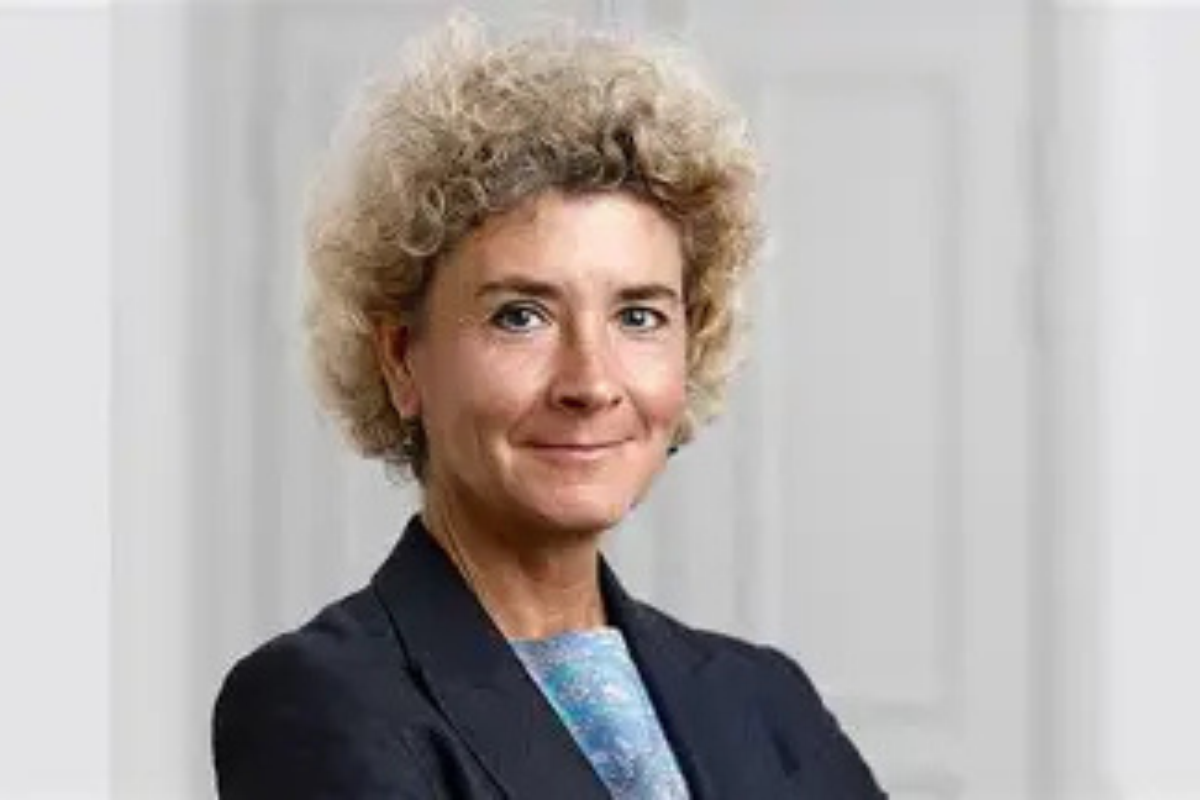
With more than 35 years of experience in the business world, Viveka Hirdman-Ryrberg has held senior positions in finance, communications, sustainability, and business development. Among other roles, she has served as Director of Communications at SEB and Head of Communications and Sustainability at Investor. Today, she is a board member of several companies and organisations, as well as a senior adviser at Novare Advisory, focusing on areas including sustainability, transformation and communications.
In her board and advisory roles, Viveka works with companies facing major changes – from new technological developments and changing customer needs to increasing demands for competitiveness and sustainability. She also brings extensive experience of looking at businesses from an external perspective.
We spoke to her about what leaders and boards need to succeed through periods of change, when external expertise can make a difference, and how companies should approach the skills and capabilities they will need in the future.
What do you think characterises a leader who succeeds in providing direction and building trust when circumstances are changing rapidly?
“Even though we live in an extremely fast-changing world, having a clear direction and vision is essential. You cannot simply be agile and make decisions on the spur of the moment all the time. You need to know where you are heading and then be prepared to adjust the course along the way.
That requires you to use both your eyes and ears, not just your words. You need to listen, take in what is happening and be able to adjust quickly when reality changes. At the same time, you must not lose sight of the short term. Even when working towards a long-term vision, you need to stay in control here and now, deliver results and be able to act quickly if the business finds itself in a difficult situation.
It is also important to actively seek out different perspectives. Within organisations, it is easy for people to start thinking alike and reinforcing one another’s views. In a complex world, we need to embrace differences in experience and ways of thinking instead.”
When do you see the need for an organisation to bring in an interim manager?
“I have not worked as an interim manager myself, but I have often acted as a sounding board and have also worked alongside many interim managers in different assignments.
It often concerns specific functions, such as CFO, HR or CEO, where the organisation needs expertise for a period of time or finds itself in a situation where there is no permanent solution in place.
One advantage of an interim manager is that they come in from the outside and have nothing to defend. They do not carry years of organisational baggage and do not need to take the same account of history or internal positions.
This can be extremely valuable in situations where problems need to be resolved quickly. An external professional can look at the business with fresh eyes, ask questions and focus on the assignment without being tied to previous decisions.”
What does an external leader need in order to make a real difference?
“They need to understand both the business and the situation quickly. Bringing in specialist expertise is one thing; understanding which problems actually need to be solved is another.
An interim manager needs to be able to hit the ground running, take an operational and hands-on approach, and understand what needs to be done. The assignment is clearly defined, as are the problems that need to be addressed.
At the same time, they must be able to listen and build trust. Even if the assignment is temporary, they need to bring people along with them in order to achieve change. In a business facing a difficult situation, an interim manager can therefore play an important role during a transition period: stepping in, addressing what needs to be resolved and creating the right conditions for a permanent solution.”
You have extensive board experience, what is required of a board when a company is facing a major transformation?
“A fundamental requirement is that board members genuinely invest time in understanding the business. They need to meet people at different levels, across different functions and in different markets.
As a board member, you should of course not become involved in day-to-day operations. But neither can you sit in your own stratosphere, looking at things only from a high-level perspective, and assume that you understand the business. To have a good working relationship with the CEO and management team, you need a genuine understanding of the business and its challenges.
It is also essential to foster an open and transparent environment where the real issues are brought to the table. The board’s role is to support the CEO, but also to challenge. Are the ambitions realistic? Are sufficient measures being taken, and quickly enough? Does the organisation need to change?”
How should boards and management teams think when everything seems equally important at the same time?
“In a changing world, it is very easy for everything to become important and for organisations to try to do everything at once. But then you also need to ask: What should we stop doing? You cannot just keep adding more and more. Prioritisation is as much about deciding what to leave out as what to include.
I also believe boards and management teams need to spend time considering different scenarios. We have all seen business plans where things are a little difficult at first, but then the curve suddenly points sharply upwards – the so-called ‘hockey stick’. You need to dare to ask: What happens if that does not happen? What do we do then? This may mean taking more decisive action earlier than initially planned.
Sometimes it can also be about people. You may have worked together for a long time and know each other very well, but a major transformation may require changes to the management team, the organisation or even the board.”
You have worked with sustainability issues for many years and have said that ‘sustainability is business’. How can boards and management teams make sustainability part of their business strategy?
“I see sustainability as a long-term competitiveness issue. It is about taking the time to understand what is happening in the world around us and trying to look a few years ahead.
My experience is that companies that thoroughly review their value chains often discover both vulnerabilities and opportunities. These may include risks in the supply chain, but also opportunities to improve cost efficiency and develop new business.
Sustainability can also be linked to innovation. This makes the issue more tangible than simply talking about broad ambitions and aspirations. Companies can use their sustainability work to drive cost efficiency while developing products and services that customers will be looking for.
Customers are not necessarily always willing to pay more for a sustainable product. But if a company does not offer it, they may not want to buy from that company at all. That is why both perspectives need to be considered.”
AI is already transforming many businesses, what does this mean for companies’ skills and competence requirements?
“I believe the first phase, when everyone was asking what AI actually is, is over. Now we need to use the technology to solve real problems.
Skills and expertise must constantly evolve. Companies cannot think that they should first replace existing capabilities and then bring in entirely new ones. They need to create opportunities for people to continue developing and building on their skills.
At the same time, the ability to bring in external expertise when it is not available internally is becoming increasingly important. This is particularly true when developments are moving quickly and a company needs specific expertise to drive change.”
What does this development mean for board work?
“If you see yourself as a professional board member, you need to make a conscious effort to keep developing your own expertise. Your knowledge of a particular field can become outdated surprisingly quickly, regardless of how long you have worked in an operational role.
A good board needs a mix of personalities, skills and experience. Different perspectives are essential for making sound decisions in an increasingly complex world.”
You have worked with change and development for many years. What do you think leaders often underestimate when facing major change?
“That change is not just about having a good strategy. You also need to be prepared to make decisions, set priorities and actually implement what you have decided.
It is easy to think that things will work themselves out further down the line, but sometimes you need to take more decisive action from the outset. You need to understand what is happening, dare to ask the difficult questions and be prepared to recalibrate when reality changes.
To me, good leadership is about combining a clear sense of direction with the ability to listen, reassess and act. That is the only way to create real change.”