




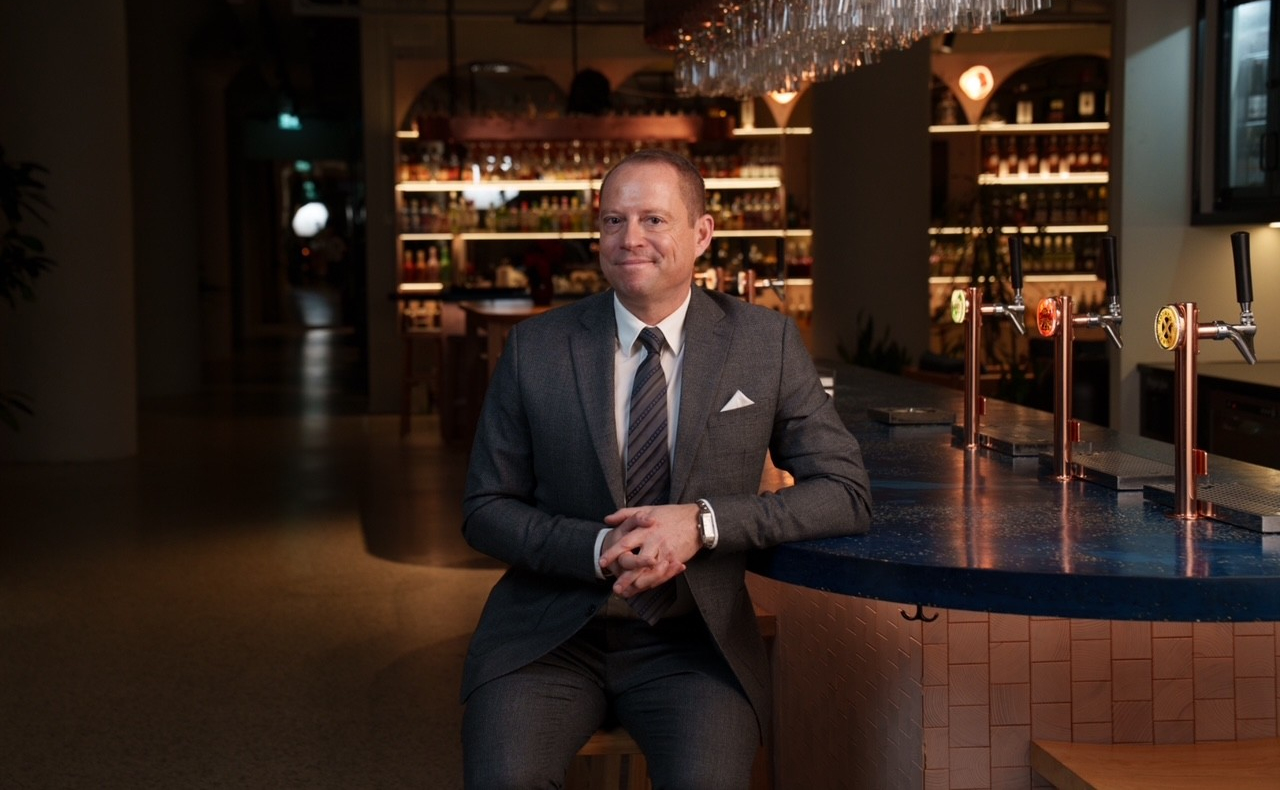
With a background as a CEO, Chief Marketing Officer and business developer, Per Sjödell has extensive experience leading companies through change, growth and new strategic directions. He has, among other roles, been Country CEO of Gant and Fiskars in Sweden, CEO of Pocket Shop and Global Marketing Director at H&M. Today, he serves as Chairman of the Board of several companies and as a Board Member of PostNord, Swedavia and Spendrups.
Per Sjödell sees clear parallels between his previous operational roles and his work on boards today. The difference is the perspective – from running the business himself to coaching and challenging the CEO, understanding the owners’ agenda and contributing to the organisation turning strategy into results. We met Per to talk about his views on leadership, board work and interim management.
You have held many operational roles and today focus primarily on board assignments. What made you leave your operational career?
“It happened rather unexpectedly and organically. I had a classic midlife crisis and started wondering whether I really wanted to continue taking on CEO roles. In a way, my career had almost been like that of an interim manager, I had stayed in each job for around three years on average, and I have always enjoyed change.
I took a break and lived in Morocco for a while, where I started a PR agency. That was when I began receiving requests to take on board assignments that I had not previously had the opportunity to accept. I started taking on a few of them and found them very interesting. I was relatively young and had the opportunity to work with exciting companies. Among other things, I became Chairman of Lindex through the Finnish company Stockmann and later Chairman of Lyko, where I was also involved in the company’s IPO.
What appealed to me was that I could focus on what I enjoy – strategy and business development – and work together with smart people. I also gained greater flexibility and could devote more time to each assignment.”
What have your operational experiences given you that you find particularly valuable in the boardroom?
“I think it is difficult to join boards if you have never had full P&L responsibility. You need to have had overall responsibility to understand the dynamics of a business, which is why I think it is important to have been a CEO.
For me, it has been very educational. I like strategy and business development, and essentially these are the same questions I worked with before, but from a different perspective.
As a CEO, you are the person responsible for execution. As a Board Member or Chair, you sit somewhat further away from the operations and instead need to coach a CEO who is responsible for turning the owners’ agenda into reality. It is a different perspective on the same task.”
How do you see the role of the board today compared with the past?
“When I started working with boards, the general view was that board work was something you moved into after your operational career, often later in your professional life. I entered the field during something of a paradigm shift, when many companies began looking for boards with stronger operational experience.
That does not mean that the board should interfere in the CEO’s work – governance remains a fundamental responsibility. But in many companies, the board has evolved from primarily being a controlling function to becoming more supportive of the business.
This is particularly evident in private equity-owned companies. In businesses with revenues ranging from a few hundred million up to around one billion, the board can almost function as an extended management team. Board members can contribute expertise that the company may not have the resources to employ on a full-time basis.
That is why I believe board work should create tangible business value. When the CEO and management team leave a board meeting, they should feel strengthened, have gained new perspectives or feel energised around an important issue. At the same time, the board must be able to set expectations and be very clear when something is not working.”
How do you find the right balance between supporting and challenging the CEO?
“It depends on the situation and changes over time. Some CEOs are relatively young and at an early stage of their development. In those situations, the Chair may need to act more as a coach and create a supportive working relationship. In other situations, you may have a very senior and self-sufficient CEO who primarily needs a clear owner agenda and clear direction.
For me, it is important that the relationship between the owners, the board and the CEO is characterised by simplicity and honesty. You need to strip away everything unnecessary and be clear about the mandate. As Chair, you need to be able to provide both support and challenge. In one situation, you may need to encourage and create energy; in another, you need to be very direct and clear. It depends on how the company is developing and how the CEO is performing.”
What characterises a good leader in an environment of change?
“I strongly believe in understanding before acting. When you enter a new organisation, it is easy to want to demonstrate decisiveness immediately. But you need to listen and understand the fundamentals of the business first. If you do not understand the business, you will not inspire much confidence either.
I tend to be cautious at the beginning and document my observations. After a few weeks or months, you hopefully understand the business well enough to start taking action.
The same applies to board work. You may only meet six or eight times a year, and it takes time to build credibility. I believe you should listen carefully to the organisation and not just meet with the management team. If there is a warehouse, go there. Get out into the business and meet people at different levels. It gives you different perspectives and a much stronger connection to the organisation.”
Do you see interim management as an important tool for companies and boards?
“Yes, absolutely. I think it is very valuable to be able to access a portfolio of highly competent people when a need arises.
My experience of interim management has primarily been with senior professionals who can step in, quickly assess the situation and contribute an external perspective. They are not as emotionally tied to the organisation and do not have to live with the consequences in the same way as a permanent executive. That can be very positive.
I think it has worked particularly well in CFO roles. An experienced interim CFO can come in with their toolbox, assess the business relatively objectively and identify what needs to be done. It is a very good solution in the right situation.”
What does it take for an interim executive to create value quickly?
“It is largely about experience and the ability to quickly understand the situation. An interim manager needs to be able to enter an organisation, read the situation, understand the business and then act. That is where I believe experience makes a big difference.
At the same time, you should not underestimate the time required to create an impact. I do not always believe in very short interim assignments of three or four months. If you want to achieve real change, the person often needs a little more time. When the right person comes in at the right time, however, it can be a very effective solution.”
Can an interim manager also bring new perspectives that the organisation is lacking?
“Absolutely. That is one of the strengths. If you choose an interim professional with the right experience, you can bring in expertise that is immediately available and may not exist internally.
For a permanent CEO, it can also be interesting to think more broadly when recruiting. In one case in a fashion company, we brought in a CEO with a very strong e-commerce background because that was an area where the company needed to develop. It became a very exciting combination.
I think it can sometimes be valuable to bring in perspectives from another industry or another type of business.”
How do you think the skills and expertise boards need will change as digitalisation and AI accelerate?
“I believe in looking at the whole picture. Boards primarily need people who can drive business and value creation.
Diversity is also very important, and by that, I mean diversity in a much broader sense than gender. We need different ages, experiences and backgrounds. That creates different perspectives and better discussions.
I do not believe in putting together a board and saying: ‘Now we need someone who understands AI’ or ‘now we need someone who understands logistics.’ The company should have that kind of expertise within the organisation. On boards, I believe more in strong generalists and business builders who understand the bigger picture and can see how different parts fit together. You need to understand the business, but you do not personally need to be an expert in brewing beer or sewing clothes to contribute to a company that operates in those areas.
At the same time, the board needs to have a deep understanding of and respect for digitalisation, AI and cybersecurity. Developments are moving incredibly fast and have major implications for all companies. These issues therefore need to be high on every board’s agenda.”
What do you think will be critical for boards and leaders going forward?
“The pace of change means that expectations are increasing. Legislation is changing faster; digitalisation is accelerating, and there are more aspects to take responsibility for than before. This makes it even more important for the board to understand the business, have the right dynamics and work together as a team.
For me, good board work ultimately means combining governance with business understanding, clarity and the ability to create value. It is not simply a control function.
A good board should contribute to the development of the company – and to helping the CEO and management team succeed in their roles.”
#CEO #ChiefExecutiveOfficer #ManagingDirector #Styrelse #Styrelseordförande