


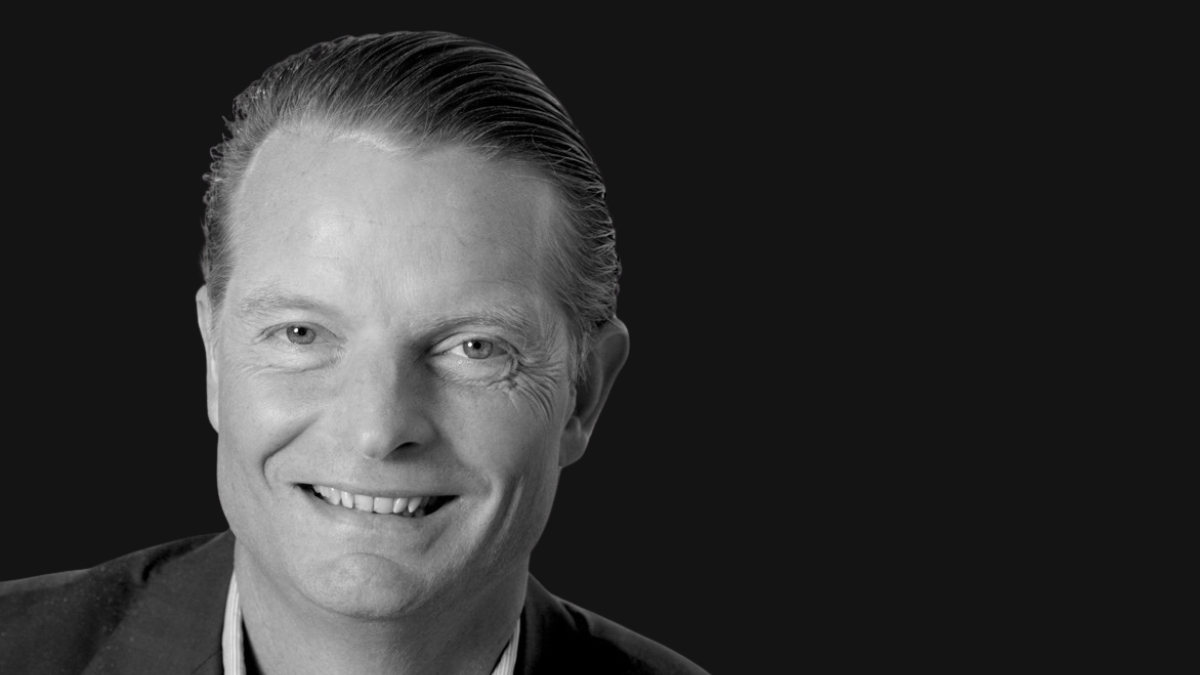
After more than three decades as an advisor to industrial companies and private equity investors, Johan Lundgren has moved to the other side of the table. Today, he is Chairman of the Board of Viken Group, as well as another private equity-owned company that is currently confidential, and Board Director of Nexam Chemical Holding and Inex One.
His experience in strategy, investments, due diligence and business development gives him a clear perspective on what is required when companies need to make difficult decisions and implement change. After many years at Bain & Company and at Alvarez & Marsal, Johan has chosen to focus entirely on board work.
We met with Johan to discuss the board’s responsibility during periods of change, what is required of leaders when circumstances change, and when an experienced interim manager can make the difference between waiting and actually moving forward.
From advisor to Chairman of the Board
Johan Lundgren was part of establishing Bain & Company’s Stockholm office in 1994 and spent 30 years with the firm, including as Managing Director of the Swedish office. During those years, he worked closely with major industrial companies and private equity funds on strategy, all aspects of M&A and the development of private equity-owned portfolio companies.
He subsequently joined Alvarez & Marsal, where he helped build the firm’s Nordic operations. The role gave him further experience of hands-on change, often involving major transformations and business development at a rapid pace. At the same time, requests for board positions began to come from former colleagues and contacts within the investment community.
“I was offered a couple of board positions, one of them as Chairman. It became difficult to combine a full-time role as a partner at a consulting firm with board responsibilities and still do both really well. I then concluded that if I was going to do board work properly and do it well, that was where I should put my focus.”
In spring 2026, Johan therefore left Alvarez & Marsal to focus fully on-board work. Today, he has four board positions in companies of different sizes, industries and stages of development.
“It suits me very well at this stage of my life and given the experience I have built up. I can contribute in different ways depending on what the company needs, and I find that very rewarding.”
For Johan, being a board member also involves a different responsibility from the one he had as an adviser.
“As an adviser, you can make a recommendation and then move on. As a board member, you have to live with the decisions and follow up on what they actually lead to. That means being very clear about what you want to achieve while also making sure that management and the organisation have the conditions required to execute.”
The board’s most important question: Are we on the right track?
When a company is facing a strategic choice or a major change, Johan sees two questions as particularly important for the board.
“One question the board needs to keep asking itself is: Are we on the right track?”
But having the right strategy is not enough. The board must also assess whether the organisation has the ability to execute it.
“We need to ask ourselves whether we have the capabilities required to achieve what we believe is right. Naturally, you look closely at the CEO and CFO, but also at the management team as a whole.”
This is an important part of the board’s responsibility, Johan believes. A strategy can be completely sound in a PowerPoint presentation and still fail if the organisation lacks the right leadership or capabilities.
For a Chairman, the role is also about creating the right conditions for the board itself to function effectively.
“My role as Chairman is very much about leading the board work and making sure that the board functions as a board and as a group, given the situation the company is in and the journey it is on. That requires the right dynamics and the ability to have constructive discussions even when opinions differ.”
“You cannot just sit in your office”
When change needs to be implemented, leadership becomes critical. According to Johan, it is above all about creating clarity around both goals and direction.
“You have to be very clear, not only about what you want to achieve but also why. Why are we doing this? Why should we do it in this particular way?”
At the same time, change is rarely straightforward. Even well-founded decisions can create uncertainty within an organisation.
“Not all changes are popular. When an organisation is told that something is going to change, it often creates uncertainty. That is when communication needs to be clear and, above all, consistent. You have to set expectations, follow up and make adjustments along the way.”
But communication alone is not enough. A leader needs to be present in the organisation.
“You cannot sit in your office. You have to get out there and talk to people, inspire them, listen and sometimes also correct course. It requires hands-on leadership.”
For Johan, it is precisely this combination of clarity and presence that enables a leader to create momentum in an organisation.
What prevents a company from reaching its potential?
With his background in investments and due diligence, Johan has seen many situations where a company fails to develop as expected. Often, the problems begin earlier than you might think.
“You have to be very confident about what you have actually bought. Thorough due diligence and a strong investment thesis are absolutely critical. Sometimes that thesis differs from reality. It can take a new owner time to discover that. At that point, the situation becomes significantly more challenging.”
But even a well-executed investment can run into problems if the company lacks the capabilities needed for its next phase.
“Once the investment has been made, it is very much about the organisation’s ability to execute. Do we have the right people and the right capabilities to drive the development on which the investment case is based?”
This becomes particularly clear when the management team needs to change. A permanent recruitment process can take a long time – and that time is not always available.
“If you need to replace a CEO, it can take up to a year to find the right person. Then the person needs to come in and get up to speed. That can take another year. A private equity owner does not have that kind of time.”
That is why the board sometimes needs to act before all the answers are in place.
“If something is bothering you or your gut tells you that you need to do something, you have to act. Better a solution that is 80 percent right and can be implemented quickly than one that is 100 percent theoretically perfect but difficult to implement in practice.”
When is an interim manager the right solution?
This is where Johan sees a clear role for interim management. He has personally used interim managers, including in CFO roles, when companies have needed to strengthen their leadership quickly.
The CFO function is particularly important in a private equity-owned company, where the quality of financial information and reporting is critical.
“The CFO is one of the most important roles in a private equity-owned company. You need to have control over the numbers and ensure that reporting works, so that the owner can trust the information on which decisions are based.”
But the need for an interim manager does not only arise when someone leaves. It can also be about the company entering a new phase and needing a different type of leadership or expertise.
“A company may have had a Finance Director who has performed well, but when the company enters a new phase, it may need a CFO with greater weight and a more strategic perspective. Someone who knows what a strong finance function should look like and who can make things happen.”
For Johan, it is precisely the ability to act quickly that makes interim management particularly relevant in situations of change.
“When we have brought in interim managers, it has worked very well. You need to implement the change quickly, and that person can come in and start building what is needed while you search for a permanent solution.”
Interim management is more than filling a vacancy
According to Johan, it is important to see interim management as more than a temporary replacement for a vacant position.
An experienced interim manager can stabilise the business, drive change and build the foundations for the next phase, while giving the board and owners time to make a well-considered permanent appointment.
“That is almost the whole point. You buy yourself time and know what you are getting. It may not be the perfect solution in every respect, but it is a trusted and experienced individual who can get things done and prepare the organisation for the permanent person.”
In this way, interim management is not a pause in development, but a way of actively using the transition period.
“The permanent person then does not have to start by cleaning up the whole house. A lot can already be in place when they arrive.”
At the same time, this places high demands on the person taking on the assignment. An interim manager needs to be able to step in quickly, understand the situation and start delivering results without a long learning curve.
“An interim manager is not tied to the history”
There is another aspect that Johan considers important: the independence of an external leader.
“An interim manager is not tied to the history. The person comes in without a personal career interest in the company and without previous relationships or internal politics. That makes it easier to implement change quickly.”
This can be particularly valuable in situations where an organisation has become stuck in old ways of working or where difficult decisions have been postponed.
An external leader does not have to defend previous decisions or consider internal career paths. Instead, the assignment is to solve the situation the company is facing here and now.
This also means that interim management can become an important part of the board’s toolbox when the organisation lacks the necessary capabilities or capacity.
“The board needs to understand what the company needs and have the courage to act when the right capabilities or capacity are not in place. Sometimes the right decision is to recruit permanently. Sometimes it is to first bring in an experienced person who can step in immediately and create the change that is needed.”
The right leadership for the right phase
After more than 30 years as an adviser and with experience spanning investments, business transformation and board work, Johan has now chosen to focus entirely on board positions. What connects his various assignments is the need to understand where the company is – and what is required for the next step.
Ultimately, he believes that owners, the board, management and the organisation need to be aligned around both direction and execution. And sometimes that means acting before the perfect solution is in place.
#BoardofDirectors #BoD #ChairmanoftheBoard