


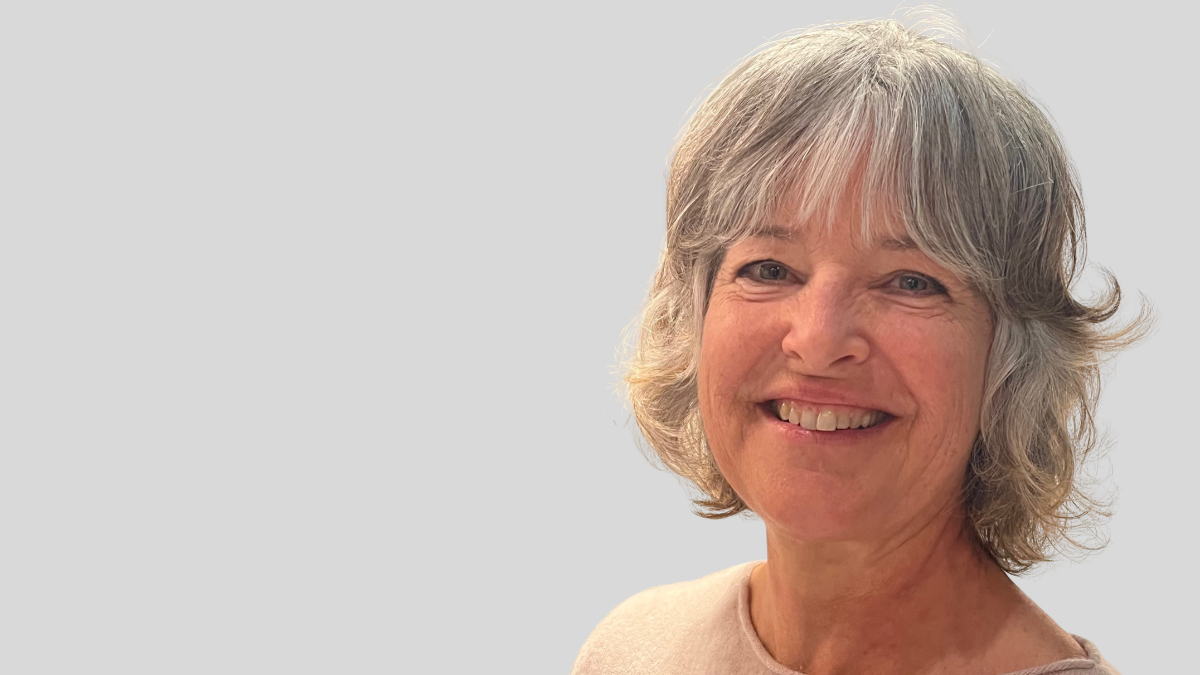
Throughout her career, Anna Elgh has worked with leadership, change management, logistics, supply chain and sustainability at companies including SAS, Vardaga and Lantmännen. As CEO of Svenska Retursystem, she led an extensive transformation in which traditional management roles and the conventional management team were replaced by a more self-managing organisation. For Anna, the future of leadership is about trust, accountability and the ability to lead more with the heart than the head.
Today, Anna works as a mentor, board chair and business development advisor. Among other positions, she is a board member of Destination Funäsfjällen and Chair of Matmissionen. She has previously served on the boards of companies including Green Cargo and Swedavia.
We met with Anna to discuss what she has learned about self-leadership, why trust is essential during times of change and how boards can provide better support to CEOs and management teams. We also explored why she sees a strong connection between people’s relationship with nature and the sustainable transition that businesses are facing.
You led a major transformation at Svenska Retursystem, where traditional management roles and the management team were removed. What made you challenge the conventional view of leadership?
“When I joined Svenska Retursystem, the organisation was quite dysfunctional. There was a low level of trust, conflicts between different groups and a lack of transparency. Initially, I did what many new CEOs tend to do: I recruited new leaders whom I trusted.
Things improved, but after a while the organisation started slipping back into old patterns. The conflicts returned, and it almost felt as though something was embedded in the walls.
That was when we started working much more fundamentally with communication throughout the organisation. How could we create greater openness? How could we give each other more feedback? We carried out an extensive leadership development programme involving the entire organisation. We also focused heavily on self-awareness and understanding how different people work.
During that process, we drew inspiration from Frederic Laloux and his book Reinventing Organizations, which explores, among other things, self-managing organisations. Many of us felt that this was a direction that really appealed to us.
In traditional organisations, there is sometimes an assumption that employees need to be controlled and instructed. We wanted to start from a different premise: that people are adults, capable and motivated to do a good job. It is about creating the conditions for people to take responsibility. I believe that is a very important key to motivation.”
What does self-leadership mean in practice?
“For me, self-leadership is very much about accountability. If you remove traditional management roles, you have to be very clear about who is responsible for what. It doesn’t mean removing leadership. It means distributing leadership differently.
When our Head of IT left, we had already been working with coaches to develop our internal collaboration. Instead of immediately recruiting a new Head of IT, we allowed the team to become a pilot for a more self-managing way of working. The team was given responsibility for distributing the work and allocating responsibilities themselves.
It became a very practical way of demonstrating that self-management does not mean everyone simply does whatever they want. On the contrary, it requires clarity around roles, responsibilities and expectations.”
What did you learn about yourself as a leader during this journey?
“Above all, I learned how important it is to dare to let go of control. As a CEO, you are used to being the person who is expected to have the answers and make the decisions. But when working with self-managing organisations, you need to create the conditions for others to make good decisions instead.
It also requires a high level of self-awareness. You need to understand your own drivers, fears and need for control.”
What characterises good leadership when an organisation is facing change or uncertainty?
“I would distinguish between an acute crisis and a more long-term transformation. In an acute crisis, very clear leadership is essential. Everyone needs to know who is leading the crisis response, what different people’s roles are and how decisions will be made. Even in a self-managing organisation, there needs to be a clearly defined crisis structure.
However, when it comes to longer-term transformation, communication and self-leadership are just as important.
What is exciting about a self-managing organisation is that it can become much more dynamic. Responsibilities, resources and ways of working can be adjusted continuously as the needs of the business change.
I really experienced the strength of being able to make daily adjustments to whatever needed improvement, rather than waiting for a manager to make a decision.”
You have experience both as a CEO and as a board member, including at Swedavia and Green Cargo. What do you think a board needs to understand about operational realities?
“I don’t think the board should function as merely a control body. If you trust your CEO, the board also needs to consider what kind of support that CEO needs. Being a CEO can be quite an exposed position, which is why I believe it is important for the board to provide a safe environment where the CEO can discuss problems, challenges and difficult decisions without constantly feeling that they are being held to account.
If the board does not trust the CEO, that is a different matter. In that case, perhaps a change of CEO is necessary. But as long as trust exists, I believe the board’s role is to contribute experience, perspectives and support.
I think a CEO should be able to walk into a board meeting and feel: These are people who want me to succeed and who can help me do so.”
What can a board contribute when an organisation is facing a major transformation?
“The board needs to understand the purpose of the transformation and be willing to ask the difficult questions. Why do we need to change? What do we want to achieve? And how will we know whether the transformation is actually taking us in the right direction?
At the same time, the board needs to understand that it cannot own the transformation on behalf of the organisation.
For a transformation to be sustainable and work in the long term, the organisation itself must drive it. Employees need to feel that it is their transformation, not something that someone else has decided for them.
That is where I believe self-leadership becomes so important. You cannot create sustainable change simply by introducing new processes and models. People themselves must want to drive the change and have the ability to do so.”
When can an organisation benefit from bringing in an executive interim manager?
“I have personal experience of bringing in interim professionals, some of whom have subsequently stayed on in the organisation. It can be a very good way of testing how well you work together.
An interim manager can also step in very quickly and bring experience from a wide range of organisations and situations.
I have worked in many different industries myself, and I find it striking how similar many of the challenges companies face actually are. Products, customers and business models may differ, but many of the problems management teams need to deal with are quite similar.
That is a major strength of an experienced interim manager: the ability to quickly recognise situations, identify patterns and draw on experience from other organisations.”
Sustainability is clearly an important part of your work and commitment. How is sustainable transformation connected to leadership?
“I believe we need to change the way we think about both leadership and sustainability. Unfortunately, I feel that leadership in many organisations has become more hierarchical again compared with when I started my career. At the same time, we are facing enormous changes in terms of climate, resource consumption and our impact on nature.
This will require us to challenge traditional power structures. I believe we will see more flat organisations, more inclusive leadership and leaders who lead more with their hearts rather than just their heads. That is my conviction if we are to succeed in achieving a truly sustainable transition.”
You have chosen to spend more time in nature following your years as a CEO. What has nature taught you about leadership?
“When I stepped down as CEO of Svenska Retursystem about three years ago, I had an idea that I would spend less time on Teams and more time outdoors.
I have always loved outdoor activities, but nature has taken on an even greater significance for me in recent years. Today, among other things, I work as a certified forest bathing guide and hiking leader, and I am involved with Destination Funäsfjällen and Härjedalen’s Antiquarian Society.
I believe part of our sustainability problem is that we humans have lost our connection with nature. We have become very alienated from it. It is difficult to feel responsible for something you no longer have a relationship with.
For me, nature is also a place where you can pause, reflect and gain perspective. I believe that is something we need more of in working life, where the pace continues to accelerate.”
If you could give one piece of advice to a CEO or Chair of the Board facing a major transformation today, what would it be?
“Start by asking: Why are we undertaking this transformation? What is its purpose? What do we want it to achieve?
For change to be sustainable and work in the long term, the organisation itself must own it. The organisation needs to be involved in driving the transformation and take responsibility for making it happen.
You cannot create sustainable change by having someone from the outside tell the organisation what to do. Change only truly comes to life when people take responsibility themselves.”
#CEO #ManagingDirector #SelfManagement #BoD #Boards