



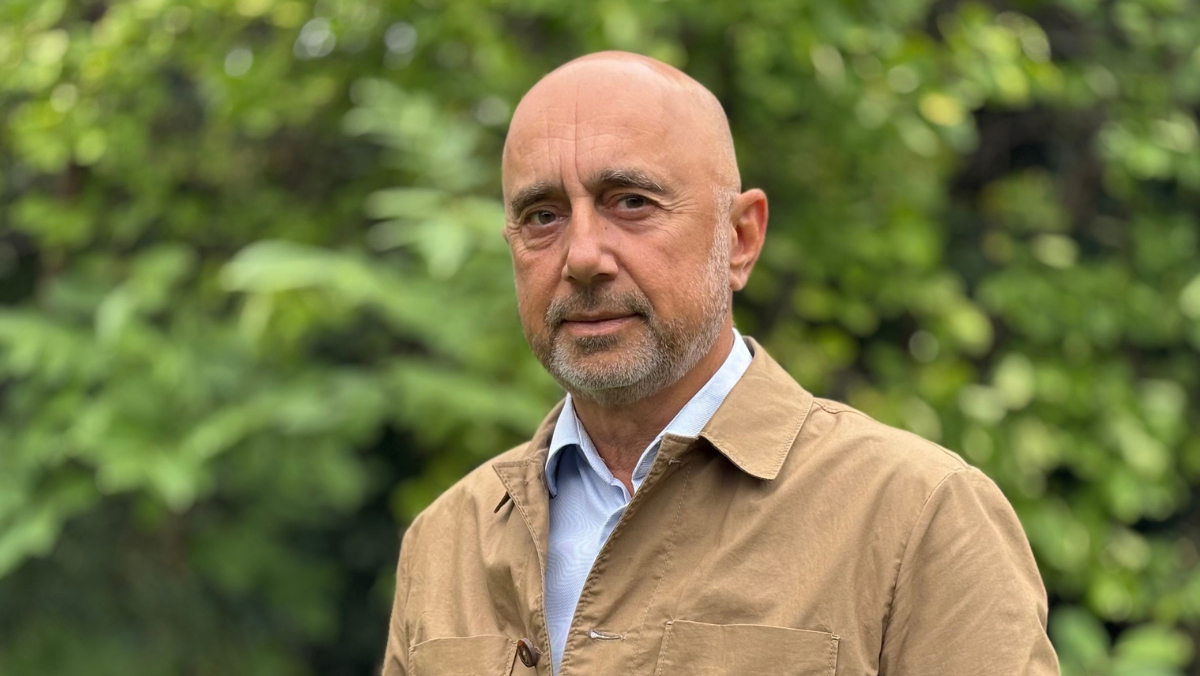
With more than 30 years of experience in international leadership roles, Peter Jhaveri has seen companies and organisations from several perspectives: as an operational leader, board member and interim manager. He has held senior positions at companies including Tetra Pak, Billerud and Södra, working in complex organisations across several parts of the world.
Peter began his career at Tetra Pak after studying Engineering Physics at Lund University, spending 27 years with the company. During that time, he held several international leadership roles, including positions in Switzerland and Malaysia. He subsequently continued his operational career at Billerud and Södra.
Alongside his operational career, Peter began taking on board assignments around 2014. During the pandemic, he took on his first interim assignment, giving him an additional perspective on leadership and change. Today, he combines board work with the opportunity to step in as an interim CEO when a company needs experience, pace and clear leadership.
We met Peter to discuss how leadership evolves with experience, how boards can support change, and why an experienced external leader can sometimes see things that have become invisible to the organisation itself.
Leading through others
You spent many years leading both businesses and other leaders. What was the biggest change in your own leadership when you began leading through other managers?
“I’m very glad I gained my experience in a large company. At Tetra Pak, I had the opportunity to try different roles, work internationally and meet many different types of leaders. That gave me role models, training and opportunities to develop as a leader myself.
An important step came when I started leading other leaders. When the people reporting to you are experienced leaders in their own right, you can delegate more broadly and focus more on management by objectives. Your role becomes more about creating the conditions for others to succeed and develop their own leadership skills.
Communication has always been one of the most important aspects of leadership for me. It’s not about communicating as much or as little as possible, but about communicating in the right way, with the right person or function, at the right time. That applies both internally and in relationships with customers and suppliers. Effective communication can resolve a great many issues. When it doesn’t work, the cost can be significant.
I’ve also always believed that a leader needs to understand the business in depth. You need to be able to take a high-level view and see the bigger picture, but sometimes you also need to dig into the details to really understand what’s happening. Then you need to step back up again quickly.
It’s not about micromanaging. It’s about being able to make better decisions and showing the organisation that you understand the work people are actually doing. I strongly believe in the ability to move between the big picture and the details.”
From operational leadership to the boardroom
You’ve moved from operational leadership roles into board work yourself. What is the hardest thing for an experienced business leader to leave behind when joining a board?
“Not solving the problems and making opportunities happen yourself. As an operational leader, you’re used to identifying challenges, both positive and negative, and then doing something about them together with your team. On a board, you instead have to rely on the CEO and management team, challenge them constructively and follow up. The board’s role is to govern, support and monitor, not to take over the business. When you have extensive experience of running a business yourself, it’s easy to become too involved in operational matters. But the CEO needs to be able to do their job.
It also requires the board to work well as a group, and the chair naturally plays an important role in that. A key responsibility is to ensure that the board has the expertise the company actually needs, even though the nomination committee and shareholders’ meeting are responsible for determining its composition. The skills and capabilities required can vary considerably depending on the company’s situation, size and challenges.
The relationship between the owners, the board and the CEO is also important. In smaller, owner-managed companies, for example, it can take time to find the right balance when an active owner brings in an external board for the first time. In those situations, it’s important to be clear about who is responsible for what.
For me, a good board is largely about balance. You need to be close enough to understand what’s happening but maintain enough distance to see the bigger picture and ask the questions that may not be asked within the operational organisation.”
When the board needs to dare to challenge
What do you most often see going wrong when a board and management team try to implement major change?
“The first thing is that everyone needs to agree on what the change is actually about. Why do we need to change? What are we trying to achieve? What will it take to get there? The owners, board, CEO and management team need to share a common understanding. Without that, it becomes very difficult to drive the change forward with conviction.
The board then needs to be willing to follow the change closely and genuinely. It’s not enough to receive a report saying that a plan has been developed. You need to understand what is actually happening in the business.
Change often requires pace. The board can be an important source of support, but it can also become an obstacle if things get bogged down in too much analysis and reporting. The board must dare to ask the difficult questions: Is this really working? Are we moving fast enough? Does management have the right conditions to succeed? And above all, do we still share the same understanding of what we’re trying to achieve and how we’re going to get there?
In some situations, a board member may also need to contribute more actively to a specific issue, for example by helping establish structure, providing specialist expertise or ensuring that management has the right support. But this must be done without taking over operational responsibility.”
When an external leader can make a difference
You took on your first interim assignment at Södra during the pandemic. What did you discover that distinguishes interim leadership from a regular operational management role?
“One major difference is that you come in from the outside and have to understand the situation very quickly. You don’t have months to build up your understanding of the business, the people and the problems.
But there’s another advantage, too. You arrive without having been involved in all the decisions made previously. You don’t have the same history within the organisation, so you don’t need to defend what has been done in the past. That makes it easier to ask questions such as: Why do we do things this way? Is it really working? What needs to change?
I think that’s one of the great strengths of interim management. An experienced external leader can sometimes see things that have become invisible to people who have been inside the organisation for a long time.
That doesn’t mean the external person is automatically right. On the contrary, you need to be humble. What looks simple from the outside isn’t always simple when you come in and start working on it. But you can offer a different perspective and dare to question things the organisation has grown accustomed to.
It can also mean quickly assessing the management team, the organisation or the strategy. When a company needs to make decisions and build momentum, it can be valuable to bring in someone who doesn’t just analyse the situation but also has the mandate and experience to implement change.
That’s why I think companies sometimes wait too long before considering interim management. You don’t always have to wait for the perfect permanent solution. In certain situations, a company needs someone who can step in, understand the situation, make decisions and create change here and now.”
Combining three perspectives
You have experience as an operational leader, board member and interim manager. What can you see from one of these perspectives that is difficult to see from the others?
“They complement one another in many ways. As an operational leader, you learn what it actually takes to get things done. In the boardroom, you gain a different perspective and see the business more from the outside. As an interim leader, you also come in from the outside and have to understand both the business and the people very quickly.
That last aspect is particularly instructive. You have to listen, ask questions and quickly determine what matters and what doesn’t. You can’t afford to get caught up in everything that is interesting. You need to identify what actually affects the business and what needs to be done.
The board perspective has also taught me the importance of taking a step back and looking at the bigger picture. As an operational leader, it’s easy to become very focused on what’s directly in front of you. On a board, you need to look further ahead and focus on direction, risks and opportunities, and above all, long-term value creation.
Having experienced both perspectives also makes you humbler, I think. Organisations are complex. What looks straightforward from the boardroom can be much harder to implement in the business, and what is obvious within the business isn’t always visible from the boardroom.
That’s probably why I find the combination of operational experience, board work and interim management so valuable. It allows you to see the organisation from several different angles.”
What experience really teaches us
After more than 30 years in leadership roles, what do you know about leadership today that you wish you had understood earlier in your career?
“I think I used to want more answers than I need today. I felt that a good leader should be able to understand everything, make the right decisions and then drive them through. Today, I’m much more comfortable relying on other people’s skills and experience than I was in my first leadership role.
Leadership is much more about being able to listen, learn and change direction when circumstances change. You need to dare to make decisions even when you don’t have all the answers, but also be prepared to change your mind when new information becomes available.
I think this will become even more important in the future. The pace of change is accelerating, and leaders will need to deal with greater uncertainty than before. That requires both speed and humility.
I also think we need to embrace a more agile approach to leadership. Not everyone will get everything right all the time, and not every decision will be perfect. What matters is being able to learn quickly, adjust and move forward.
For me, leadership is also something people can demonstrate regardless of their role or title. An organisation doesn’t just need managers who know how to lead. It needs everyone to take responsibility, recognise what needs to be done, bring others along and get things done.
Perhaps that’s the biggest difference compared with earlier in my career. I no longer need to come up with so many of the solutions myself. My role is more about creating the conditions for the organisation to find the best solutions and having the courage to act when needed.”
#MangingDirector #MD #CEO #Chairperson #ChairmanoftheBoard #Management