



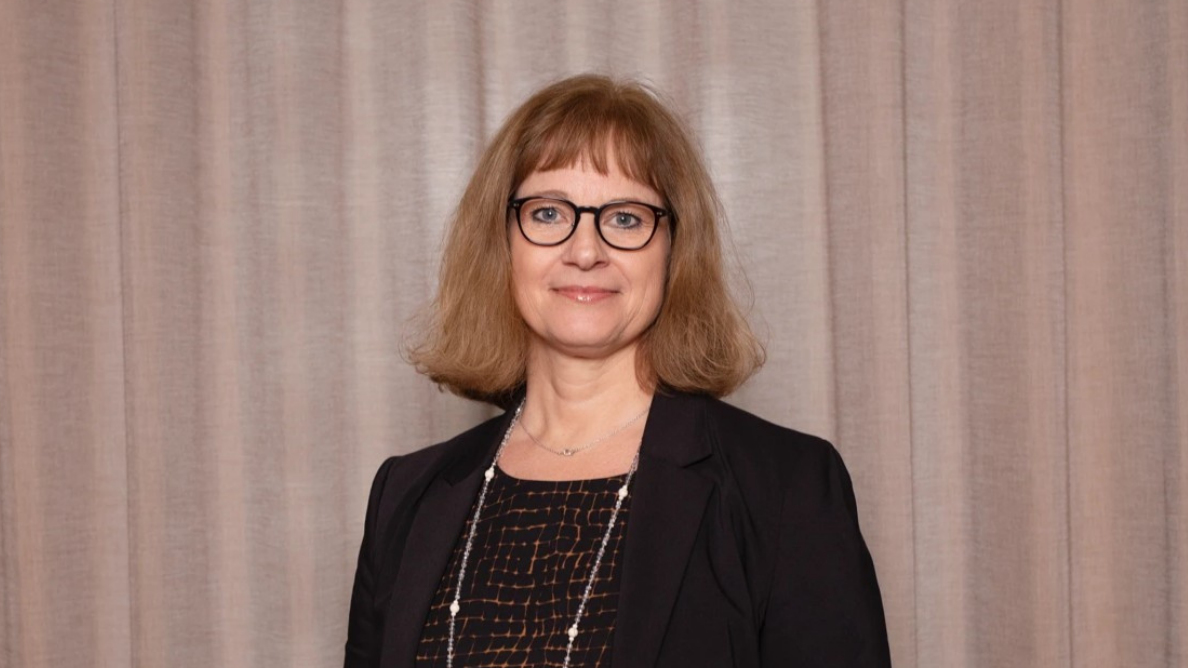
With a career spanning senior roles in finance, strategy, and business development at companies such as Volvo, AstraTech, and SKF, as well as experience as a CFO, board director and interim manager, Eva Nilsagård has developed a broad understanding of what it takes to lead and develop businesses through change.
Today, she serves on the boards of both listed and privately held companies, ranging from Small Cap to Large Cap. We met with Eva to discuss value-creating board work, leadership in times of change and interim management as a strategic tool.
Understanding the business – the foundation of leadership
Whether working in finance, strategy, business development or the boardroom, one principle has remained constant throughout Eva Nilsagård’s career: understanding the business.
“It is the most important thing, regardless of which leadership role you have. If you do not understand the business and what drives it, you cannot do a good job. That is what ultimately generates results.”
Eva’s career has been shaped by a willingness to seek out new challenges and step into situations where there has not always been an obvious roadmap. That experience has shaped her perspective on change. For Eva, transformation is not about defending the status quo, but about recognising the opportunities that come with what is new.
“When you have experienced change many times, you develop a sense of calm, even when the situation is critical. Experience from different roles and businesses also gives you a 360-degree perspective.”
That perspective means looking beyond the individual issue and understanding the interplay between financial performance, operations, organisation and people.
“You cannot focus solely on the financials. You need to look at the business as a whole, the people and how the different parts are connected. I like to think in several dimensions and across several levels.”
Leading when circumstances change
Throughout her long career, Eva has experienced several financial crises, changes in the external environment, major reorganisations and transformation programmes. One of the key lessons she has learned is the importance of maintaining the ability to act when circumstances are uncertain.
“It is easy for management to focus on the potential consequences of an event. When that happens, you risk losing focus on what you can actually influence. You need to make the most of the situation and use it in the right way.”
For Eva, effective crisis management starts with a realistic understanding of the current situation.
“Where are we? What can we influence, and what do we need to do now? We do not have a crystal ball. You need to be able to change direction quickly, remain calm and think clearly. Working with different scenarios is a good and structured way forward.”
This perspective is equally relevant in the boardroom. When circumstances change rapidly, the board and management need to distinguish between what requires immediate action and what can wait.
From control to value creation in the boardroom
After her time as CFO at Plastal, Eva moved into board work and interim management. Since then, she has held board positions in both listed and privately held companies and has been involved in seven IPOs.
She sees control and follow-up as fundamental elements of effective board work – but not as the board’s primary opportunity to create value.
“Control and follow-up are hygiene factors. They need to be in place and embedded in the daily routines. The better the control, the less board time needs to be spent on it.”
When the fundamental control mechanisms are working, the board can instead focus more of its time on strategic issues.
“An important part is supporting the CEO and inspiring management. I always try to contribute energy, even when I challenge the management team.”
For Eva, effective board work is about combining clarity with trust. The board should set the direction, challenge management when necessary and, at the same time, give management the mandate to act.
“You need to agree on the direction and then give the CEO enough mandate and energy to execute the strategy that has been set. There needs to be an open dialogue and a constructive atmosphere, both within the board and between the board and management, even when you do not always agree.”
This becomes particularly important when a company is facing major strategic decisions – such as a significant reorganisation, a divestment or a change in its business model. In these situations, the board and management need both the right decision-making material and sufficient time to challenge assumptions and discuss different alternatives.
Executive interim management as a strategic tool
When an organisation is facing significant change, a gap can emerge between the expertise and capacity available internally and what the situation actually requires.
According to Eva, this is one of the situations in which interim management can create significant value.
“In the boardroom, you often receive early signals when something is not working. It may be that the organisation lacks the right expertise or capacity, but it becomes particularly relevant when the company is embarking on a major transformation.”
During periods of change, organisations often need to make difficult decisions under considerable time pressure. An external interim executive can bring experience, pace and a perspective that is less influenced by internal structures and organisational history.
“It is easier for an interim manager to drive change when the person is outside the internal politics.”
Eva sees a growing need for interim expertise as technological development accelerates.
“Today, not least because of AI and technological development, companies often lack certain capabilities. That is why interim management should be on the agenda as a strategic tool.
It is not only about filling a vacancy. Interim management can also be used to create momentum for change over a defined period – when an organisation needs experience and leadership that is available here and now.”
One example is when a permanent CEO or CFO is being recruited.
“When you are looking for a new permanent CEO or CFO, you need someone to run the business during the recruitment process if that capability is not available internally.”
But according to Eva, there is another strategic question that should also be asked:
“do you really need a copy of the person who was there before – or do you need something completely new?”
Experience, mandate and the ability to see what the organisation no longer sees
Eva has herself worked as an interim CFO and understands what it takes to enter an organisation quickly and deliver results. A clear mandate is a critical factor.
“An interim manager needs a clear mandate and a clearly defined assignment in order to deliver. An interim executive brings a high level of experience relative to the nature of the assignment. This makes it possible to quickly assess the situation, identify priorities and create structure. An interim manager is often overqualified for the assignment, which makes it possible to resolve issues and establish structure so that the permanent role holder does not necessarily need to be as senior.”
Another important strength is the ability to look at the business from the outside.
“An interim manager is an expert at quickly seeing and interpreting a situation. You can point things out more neutrally, dare to ask uncomfortable questions and make problem areas visible.”
This perspective can be particularly valuable in organisations where established ways of working have evolved over time.
“When you work in an operational role, you can easily become accustomed to the way you work. You may think, ‘This is how we have always done it.’ An interim manager can instead ask: What is making this process inefficient?”
It is precisely this combination of experience, independence and a clear mandate that, according to Eva, makes interim management particularly relevant in situations of change.
A board portfolio defined by breadth and complexity
Today, Eva Nilsagård serves on the boards of AddLife, Bufab, Apotea, XANO Industri, Nimbus Group and Xbrane Biopharma, as well as SEK (Swedish Export Credit Corporation).
Her assignments span both listed and privately held companies, and she chairs the Audit Committee in all of these companies. SEK represents a different type of board assignment, with state ownership and an owner directive to take into consideration.
The breadth and variety of her assignments are also part of what attracts Eva to board work.
“I am very curious and genuinely enjoy learning about new businesses and industries.”
She particularly values the opportunity to work with companies at different stages of development and facing different types of strategic challenges.
“It can be a growth journey, transformation or other strategic decisions. There needs to be some form of challenge for me to be interested and to be able to contribute where I can add the most value.”
Experience creates calm – curiosity drives development
From CFO roles and operational leadership to board work and interim management, Eva’s career has been characterised by a combination of business understanding, a willingness to embrace change and curiosity.
These qualities are also reflected in her approach to leadership and board work: understand the business, create a clear direction, have the courage to act when circumstances change – and keep a close eye on the numbers.
For Eva, experience is not about having all the answers in advance. It is about having been through enough different situations to maintain perspective when it matters most, while remaining curious enough to continue asking questions.
In a rapidly changing business environment, that combination is becoming increasingly important. For both boards and executive teams, it ultimately comes down to the same thing: understanding where the business is today and having the courage, expertise and ability to act to lead it forward.