


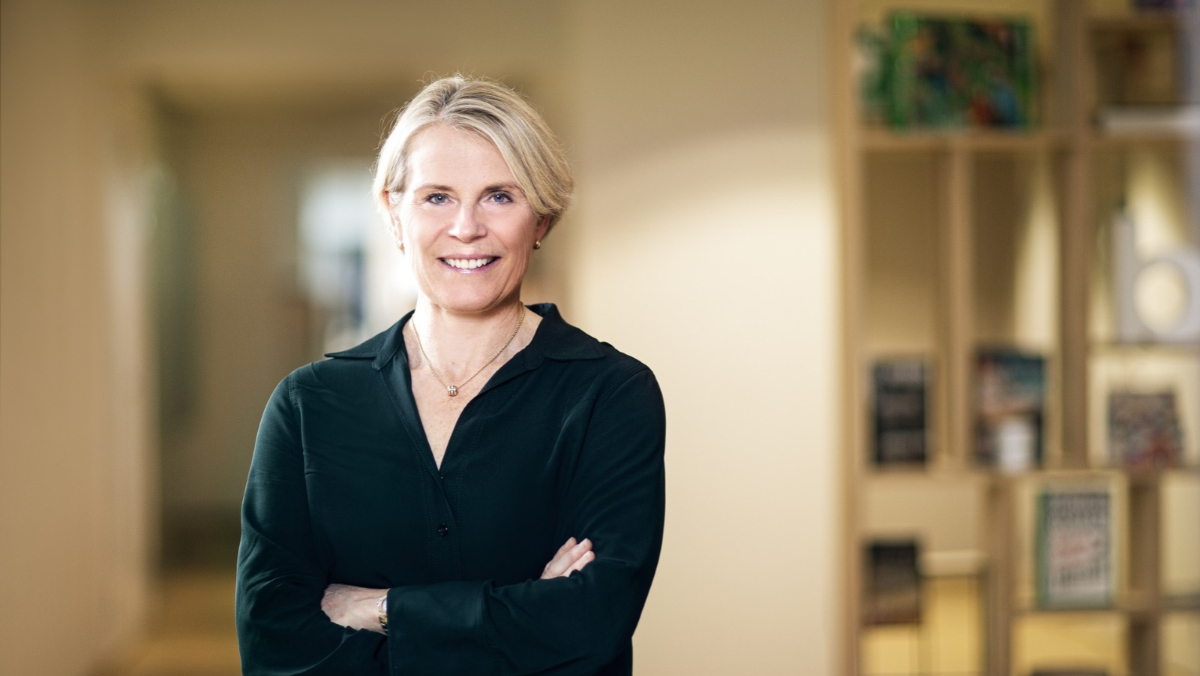
After a long career in consumer goods and retail, including as CEO of Polarn O. Pyret (retail clothes) and Bokusgruppen (eCommerce books), Maria Edsman has stepped down from her executive roles in spring 2026 to focus on board work. Today, she holds board positions at Salix Group, Volati, Rusta, Bokusgruppen and Majema, drawing on her experience in leadership, change management and business development from a new perspective.
We met Maria to discuss her career, what she has learned from leading organisations through change, and how leadership evolves when moving from the CEO role to the boardroom. We also talked about her experience of interim management and the situations in which an experienced interim manager can be the right solution for an organisation.
You have had a long career in consumer goods and retail. How did you get to where you are today?
“I have a degree in Business and Economics from the Stockholm School of Economics. After graduating, I worked for a few years as a management consultant at McKinsey & Company, but I eventually realised I was probably better suited to operational line roles than consulting.
After that, I held various senior positions, primarily in marketing and sales, within consumer goods companies. In 2010, I became CEO of Polarn O. Pyret, and in 2014 I moved on to Akademibokhandeln, which later became Bokusgruppen, initially as Chief Sales Officer and then as CEO from 2018. I stepped down from that role in spring 2026.
My first role at McKinsey gave me a very strong toolkit in problem-solving, building arguments and communication. I was also exposed to senior executives at large companies early in my career, which gave me a very good start.”
Was it an active decision to step down as CEO and focus more on-board work?
“Yes, it was. I had been thinking for some time about how much longer I wanted to continue in an operational CEO role and whether there might be an alternative that would give me a little more flexibility.
I certainly don’t want to stop working, but being CEO of a listed company means that you are seldom completely off duty and have very little control over your own time. That made me start thinking about what I wanted to do next.
I already had two board positions and was also receiving quite a few enquiries. So, I thought I would give it a try and see whether this could be a good alternative. It is still very new. I now have five board positions and am taking the time to work out whether this is the right level of commitment or whether I might want to add something else further down the line.”
Which experiences and career decisions have been most important in shaping you as a leader?
“I have never really had a clearly defined career path. Instead, I have been open to opportunities as they have come along, and one thing has led to another. Early in my career, I was given the opportunity to take on personnel responsibility, and since then I have had plenty of time to learn from both successes and mistakes.
I have always found leadership fascinating and have actively tried to develop my skills in this area. I have also been fortunate to work with many talented leaders and business professionals who have taught and inspired me. That has been an important part of my journey.”
Leading through change
During your years as CEO of Bokusgruppen, the company went through several major changes. What did you find most valuable about leading an organisation through that journey?
“One of the most important things is to surround yourself with capable people who are also committed to developing the company and achieving its goals.
Already early in my career, I had the mindset that if something was going to be done really well, I was better off doing it myself. But the bigger the responsibility, the clearer it becomes that this approach simply doesn’t work. That is why it is so important not to compromise on the team that you build and to have highly capable people who are at least as driven as you are. That is easier said than done. Attracting truly talented people who you also work well with is not always easy, but it is a very important factor.
The second thing is making sure there is a shared understanding of where you are heading and why. It sounds simple, but in a larger organisation it requires an enormous amount of communication. It is easy to think: ‘I’ve said this now, so everyone knows.’ But that is rarely the case. You have to repeat, repeat and repeat – in different contexts and through dialogue. Creating understanding and engagement is a major task in itself.”
You have extensive experience in retail. How do you bring the organisation along when change needs to reach all the way from the management team to the shop floor?
“I would say this is perhaps even more important in retail, because it is the employees in the stores who meet customers every day. If they are not on board, things won’t work. It is about everything from making time to visit stores and meet employees in person to using the digital tools available today. Teams meetings, recorded videos and other channels make it possible to share information in many different ways.
I also think it is incredibly important to create opportunities for personal interaction, where people can ask questions and have a dialogue – rather than simply broadcasting information. I strongly believe that understanding is created through dialogue. That is where people can ask questions, share their views and ultimately feel that they genuinely want to support and believe in what they are being asked to deliver.
It is also important to be willing to delegate responsibility and trust your employees. You shouldn’t micromanage everything but give people the space to grow and deliver independently. At the same time, you need to follow up on progress and share the results with the organisation. Everyone needs to know whether the work they are putting in is actually producing results. You should celebrate successes and show appreciation.
And finally, you need the courage to make difficult decisions when necessary and to dare to invest in things even when you don’t know exactly how they will turn out.”
From operational CEO to the boardroom
You have now moved from operational CEO roles to board positions. What is the biggest difference in the way you work?
“I haven’t held any chairperson positions yet, but board work naturally involves an ongoing dialogue with management. At the core, I think the same principles apply. The difference is that you are one step further removed from the detailed knowledge of the company.
As CEO, you may not know every detail, but you are still much closer to the business than you are when working from a board perspective. This makes it even more important to ensure that the board has a sufficiently sound basis for making decisions. You take another step back from direct leadership and need to find the right balance. To an even greater extent, you have to trust that the senior and capable people in the organisation can manage their day-to-day responsibilities themselves.
That is why I believe in a more coaching-oriented approach, giving the CEO and management team the encouragement and energy to keep pushing forward. At the same time, the board naturally has responsibilities and must ensure that the business is being run as it should. In many ways, the principles are the same, but you are further removed from the day-to-day operations.”
What do you think a CEO needs from the board to be able to do a really good job?
“A lot comes down to finding the right balance. The board needs sufficient insight and a solid basis for making decisions in order to fulfil its responsibilities, but at the same time it must give the CEO and management room to run the business.
As a board member, you need to respect the fact that the management is responsible for running the business. The key is not to get too involved in operational details, but rather to adopt a more coaching-oriented approach.”
When is executive interim management the right solution?
You have experience of engaging interim managers yourself. In what situations do you think an organisation can particularly benefit from an experienced interim manager?
“Often, it can be a bridge between an outgoing and an incoming executive, or a solution when someone is suddenly absent due to illness or when another unexpected situation arises that the organisation has not been able to plan for.
I have experience of using interim solutions at levels below the management team, where we have sometimes needed someone to step in as an employee was leaving and we needed time to recruit a replacement. I have also served on boards where interim solutions have been used at CFO level, specifically as a bridge between an outgoing and an incoming executive.
Sometimes, it may also be a situation where a company is going through a turnaround and wants an experienced leader to take on the more challenging work, allowing a permanent leader to step in later when the situation is more stable. I know that some companies use interim management in this way, although it is not something I have personal experience of.”
What do you think distinguishes a situation that calls for an interim manager from one that requires a traditional recruitment process?
“It may be when you have to address an immediate need. If someone suddenly leaves or goes on sick leave, you cannot always afford to wait for a lengthy recruitment process. An interim solution can then provide continuity while giving you time to find the right long-term replacement.”
What do you hope to contribute with in this new phase of your career?
“I find it very exciting to be able to continue working, but from a different perspective. I bring many years of experience in leading businesses and people, and now I have the opportunity to put that experience to use in a different way.”
#CEO #ManagementDirector #Board