


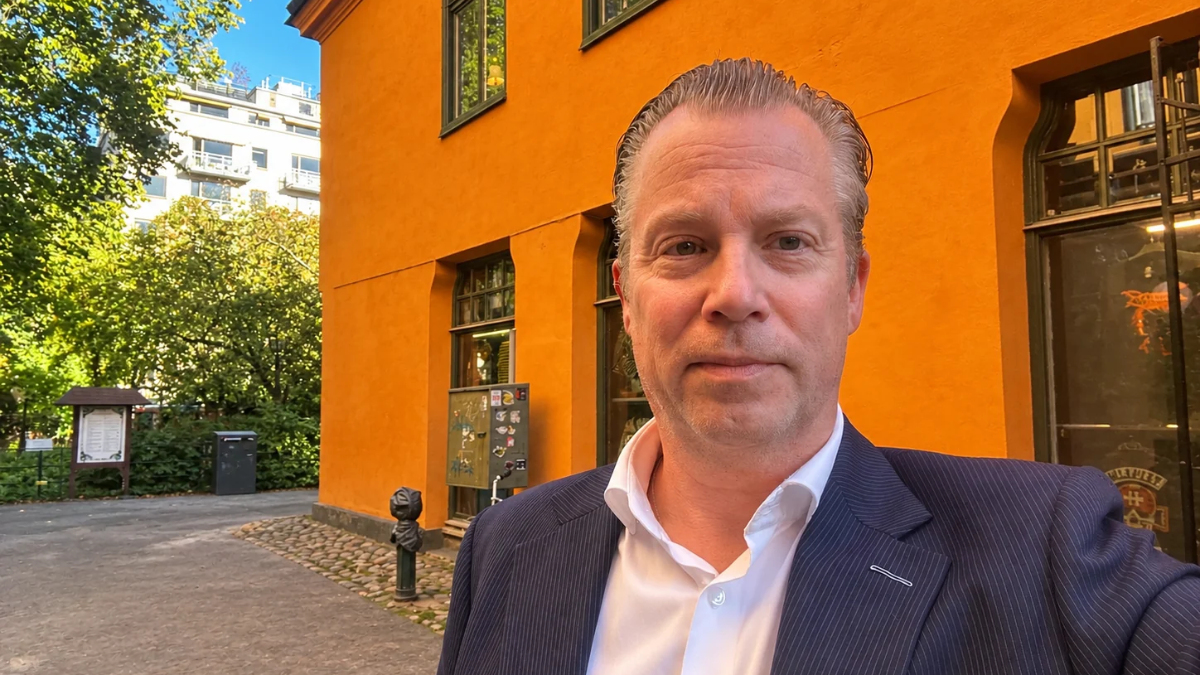
From studying Engineering Physics at Chalmers and completing a full-time MBA at Warwick Business School – one of Europe’s leading business schools – to leadership roles in IT and telecom, entrepreneurship, investments and board work. Throughout his career, Olle Bergström has moved between technology, business and finance, often in organisations where change and complexity are central. Since 2019, he has primarily focused on board assignments and investments.
Today, he serves on the boards of Climeon, Modvion and YouBed, and is Chairman of Arboair; companies that operate in, among others, energy, wood- and composite technology, and AI technology for forestry.
We met Olle to discuss what a board can genuinely contribute with, how the board and management should work together during periods of change, what characterises good leadership under pressure, and when executive interim management can be the right solution. We also discuss investments, technological development and why future boards need to understand both major external developments and their practical implications for individual businesses.
You have worked in both large corporations and startup environments. What have these different settings taught you about leadership?
“I have always been interested in technology and how things work. I studied Engineering Physics at Chalmers and was introduced early on to relativity, quantum physics, chaos and dynamic systems, as well as neural networks, which today form the basis of deep learning and modern AI development. Technology has been a constant throughout my career.
Early in my management career, I completed a full-time MBA at Warwick Business School in England. It gave me the tools to understand the business side and financing, and that was where the combination of technology and business really began to take shape.
I then spent many years working in IT and telecom and held various leadership roles for almost 20 years. During the latter part of my career, I also spent a great deal of time in startup environments, giving me experience of quite different worlds. In a large company, you often have established structures, processes and resources. In a startup, on the other hand, you frequently need to build things from scratch, make broader use of the resources available and make decisions with considerably less information.
I think this combination has taught me to switch between different perspectives. Technology is important, but understanding technology alone is not enough. You also need to understand the business, the people and what it takes to make things work in practice.”
You have also worked extensively with investments and financing. When you first encounter a company, what do you need to understand?
“I try to understand the bigger picture. There may be very interesting technology, but the question is how it will create value in the market. That means looking at customers, competitors, partners, suppliers and sometimes even the customers’ customers. What does the ecosystem surrounding the company look like? How will the technology be commercialised? What financing is required to take the next step? It is also important to look at the opportunities our changing world may create going forward.
I have spent a lot of time working with business financing and understanding the ecosystems surrounding companies. That is where I feel at home, at the intersection of technology, business and finance.
One of my strengths is probably that I know a fair amount about quite a wide range of things and can then try to bring them together into a bigger picture. But it is equally important to know when to bring in someone with more expertise in a particular area than you have yourself.”
You began taking on board assignments alongside your operational career and transitioned to full-time board work in 2019. What attracted you to take this step?
“I found board work, with its broader perspective, very interesting, and I had held board positions alongside my operational roles for quite a number of years. I simply enjoyed it and wanted to see what it would be like to do it full-time, and it has now been quite a few years. That doesn’t mean I wouldn’t consider taking on an operational role again, but board work and investments have suited me very well.
For me, there is no fundamental value in simply sitting on a board. I invest in companies myself, and sometimes that is combined with a board assignment, but it depends on how I can contribute to the company and what the situation requires.”
You currently hold several board positions in companies operating in very different technology fields. Could you tell us about the companies and what makes them interesting to you?
“What I find interesting is that the companies are quite different, although they share a common thread in technology, innovation and the ability to solve real-world problems.
The listed company Climeon is a world leader in technology for generating electricity from waste heat, for example from ship engines and process industries such as chemicals, steel, and pulp & paper. It involves temperatures of around 100 degrees Celsius that would otherwise go to waste. It is a stable energy source that can be available around the clock and is not dependent on weather conditions. Availability is very high; last summer, one of Climeon’s customers confirmed in a press release that the availability was approximately 99 %.
The economics are also attractive, with a good payback period and profitable electricity generation for the customer. If Climeon’s solution is installed in existing industrial facilities, where no new building permits or grid connection permits are required, it is one of the fastest ways for Europe to generate more energy, and it can be deployed at scale.
There is an enormous amount of heat that is currently largely being vented into the atmosphere, and Climeon’s solution is a standardised module that can be installed in almost any setting, and I believe that solutions like Climeon’s will play a much bigger role in the energy debate. It is one of the fastest ways to generate more fossil-free electricity – without new land, without new grid connections and using technology that is already available.
We recently carried out a directed share issue of approximately SEK 50 million, which attracted strong interest and brought in several new qualified investors.
Modvion builds wind turbine towers using wood-based composites. The material has a high strength-to-weight ratio, making it possible to build taller wind turbine towers. This is interesting because the wind industry wants to build taller towers to improve energy production and profitability.
The company has made very good progress, both technically and in its customer dialogue. We have also received a EUR 39 million grant from the EU, which is an important contribution to the continued rollout of the technology.
Arboair is digitising forestry through AI-powered precision inventory and analysis across large areas. Its solution can quickly analyse forests in great detail and, based on two-dimensional images taken from above, identify characteristics of every individual tree.
The technology can analyse, among other things, tree species, trunk shape, timber volume, whether a tree is stressed or damaged, and whether areas have high conservation value.
The company’s solution is already being used by a number of forestry companies in Sweden and internationally, where it has demonstrated its ability to create significant even on a smaller scale. Images can be captured using drones, aircraft or satellites, This opening up enormous opportunities for the forestry sector going forward.
YouBed is an innovation company with a very strong patent portfolio. Lars Björklund, former Director General of the Swedish Patent and Registration Office, is also on the board. It is somewhat outside the areas I normally work in, but it is a very interesting company because poor sleep is an increasingly significant public health issue.
YouBed develops beds where users can adjust the firmness individually using a remote control. For example, you might want a firmer surface around the hips and a softer one around the shoulders, without the surface of the bed sagging or changing shape.
The company has primarily focused on the hotel market, with hotels such as Mövenpick using its beds in Europe. I see very interesting opportunities for further development, including in the consumer market, where customer testing has given us very positive feedback. A fun fact is that the Swedish national football team has used YouBed’s beds and even taken them to their team hotel abroad.”
What is the biggest difference between leading a business operationally and leading through a board?
“It is partly about mandate and time horizon. As an operational leader, you are very close to the business and need to deal with what is happening here and now. On the board, you need to take a longer-term perspective. At the same time, the board should also be able to support management in the short term.
One important task is to ask the tough questions early rather than late. But it is equally important to ask the bigger questions: Where is the greatest potential, and what will it take to realise it?
The management is often very good at identifying both problems and opportunities. But when you are working operationally every day, it can be difficult to step back and look at the situation from the outside. That is where the board can provide a valuable perspective. It may involve identifying where the company can create the most value, which customers, business opportunities and partnerships could help it take the next step, and what needs to change to get there. Often, these are things the company is already aware of, but the dialogue between the management and the board can help bring them into sharper focus.
It is also important not only to ask what has happened, but where you want to go and what might happen next. What opportunities are emerging? What are our assumptions based on, and what do we do if they turn out to be wrong?
I believe the board’s most important role is to help the management look from the above, dare to aim higher and find ways to maximise the value of the opportunities ahead. And when things are not going in the right direction, to have the uncomfortable discussions in time, before they turn into bigger problems.”
How do you avoid the board becoming too operational?
“I think it has a lot to do with experience, but also with humility. You should draw on your own experience as well as the experience of others on the board and around the company. But you cannot simply say: ‘I’ve done it this way three times before, so it must also be the right approach now.’
Every situation is unique. You need to understand what is specific to the company and the situation it is facing. There is a grey area between being too passive and stepping in to take control. The board should be able to challenge and support the management without taking over the management’s responsibilities.”
What should a board be able to contribute with when a company is experiencing rapid growth or is undergoing major change?
“The composition of the board is extremely important. Particularly in a company that is in its early stages or experiencing rapid growth, the board needs to understand the company’s actual conditions and opportunities, as well as what expertise is required to take the next step.
You cannot apply the same expectations to a company in an early growth phase as you would to a stable, mature business. The challenges are entirely different. That is why you also need to be prepared to evolve the board’s expertise over time. A company may initially need entrepreneurial experience and financing expertise but later require greater experience in areas such as international expansion, organisational development or industrial scaling.
There also needs to be a good dialogue within the board and between the board and the management, including between formal board meetings.”
You have experience of both large organisations and fast-growing companies. What tends to distinguish organisations that succeed in changing from those that get stuck?
“It may sound simple and a little clichéd, but it has a great deal to do with the people in the organisation, as well as customers and partners.
When you want to change something, you have to stop doing things the old way and start doing them differently. That is not easy. We tend to simplify things through routines, which is natural and often very effective. But those same routines can also reinforce behaviours that the organisation actually needs to change.
You can come up with the world’s best idea, and it may be exactly the right one. But if the people in the organisation haven’t understood it or been given the opportunity to grasp what it means, it will just remain a paper exercise.
That is why you need to understand the people and the situation and create the conditions for working in a new way. Naturally, clear objectives and follow-up are also needed. These are important tools in change management. But there is also a more human dimension that requires sensitivity to the people involved and the situation at hand.”
You have experience of working with executive interim management yourself. When do you think interim management is the right solution?
“There are quite a few situations in which interim management can be a very good solution. It may be a temporary need for a limited period, or expertise that is required for a certain time but not on a permanent basis.
It may also be a matter of timing. You might need someone sooner than a permanent recruitment process would allow, or someone who can step in and drive a specific change initiative for a limited period.
I have seen examples where an interim manager comes in to deliver during a particular phase, such as restructuring the business or reducing costs, and where someone else subsequently takes over to rebuild the business. This can be very effective if you have the right person for the right situation.”
What is essential for an interim assignment to create real value?
“Naturally, the most important thing is that the person coming in has the right experience and expertise for the situation the company is facing.
But it is also about being clear about the actual assignment. Does the company need to stabilise the business? Implement a change? Address a temporary skills gap? Or accomplish something that the organisation cannot deliver with its existing resources?
The mandate also needs to be clear. If the person is expected to drive change, the organisation needs to understand why they are there and what the assignment entails. Being clear about this from the outset also makes it easier to find the right person and measure the results.”
You currently have several board assignments and investments. What do you look for when you get involved in a company?
“Sustainability and technology are a common thread, but above all, it is about the opportunity to create real value. I find it particularly interesting when you can combine a sound business with actually making something better.
It may involve energy, resource efficiency or using technology to solve tangible problems. For me, it doesn’t have to be ‘green’ for the sake of being green. It also has to make good business sense; otherwise, the environmental impact will not have the momentum or reach needed to make a difference.
Naturally, I look at the technology and the competitive advantage it can create, but I also pay close attention to the entire ecosystem surrounding the company. A good idea is not enough. You need to understand how the technology will be commercialised, who the customers are, which partners are needed and what the financing will look like.
Often, the real challenges lie in bridging the gap between promising technology and the ability to create value at scale.”
How do you view the relationship between sustainability and profitability?
“I think it becomes most interesting when they reinforce one another. Energy is a good example. I believe there is now a much stronger focus on energy independence and access to affordable energy. It is not just about climate, but also about competitiveness, security of supply and independence.
There are many areas where technological development can contribute to better resource utilisation and a stronger business. In those cases, sustainability becomes part of the business model rather than something added on top of it.”
Which external developments do you think boards need to understand better today than they did a few years ago?
“Boards need to look beyond their own companies and understand what is happening in the wider world. AI is naturally one such area, but it is also about societal trends, technological development, geopolitics and energy supply.
Conditions can change rapidly, meaning that boards need to be prepared to reassess assumptions that may previously have been taken for granted.
The important thing is not simply to acknowledge that something has changed, but to ask: What does this mean for us? How can we not only adapt the business but also identify new opportunities?
That is where I believe a good board can make a difference – by taking a broader perspective while helping the management translate major developments into concrete implications and opportunities for the business.”
What capabilities will future boards need?
“The ability to understand change and connect different perspectives is becoming increasingly important. Technology, business, finance, geopolitics and societal developments are interconnected in ways that mean you can no longer look at an issue in isolation.
At the same time, I think it is important to retain the ability to understand the individual company. It is easy to get caught up in the big trends, but ultimately, you need to be able to translate them into one question: What does this mean for our business?”
What is the one big thing you have learned during the course of your career?
“That there are rarely simple answers. Experience is extremely valuable, but it should never become an excuse to stop being curious. Every company, every situation and every person is a little different.
I therefore believe a good board needs to be able to do two things at once: draw on the experience it has accumulated while also being willing to question its own assumptions.
Perhaps that is also what makes board work so interesting. You need to be able to take a broader perspective while understanding the details well enough to ask the right questions.
And sometimes, the most important question is simply: What is it that we haven’t yet understood?”
#CEO #ManagingDirector #Boards #ChairmanoftheBoard #COB