



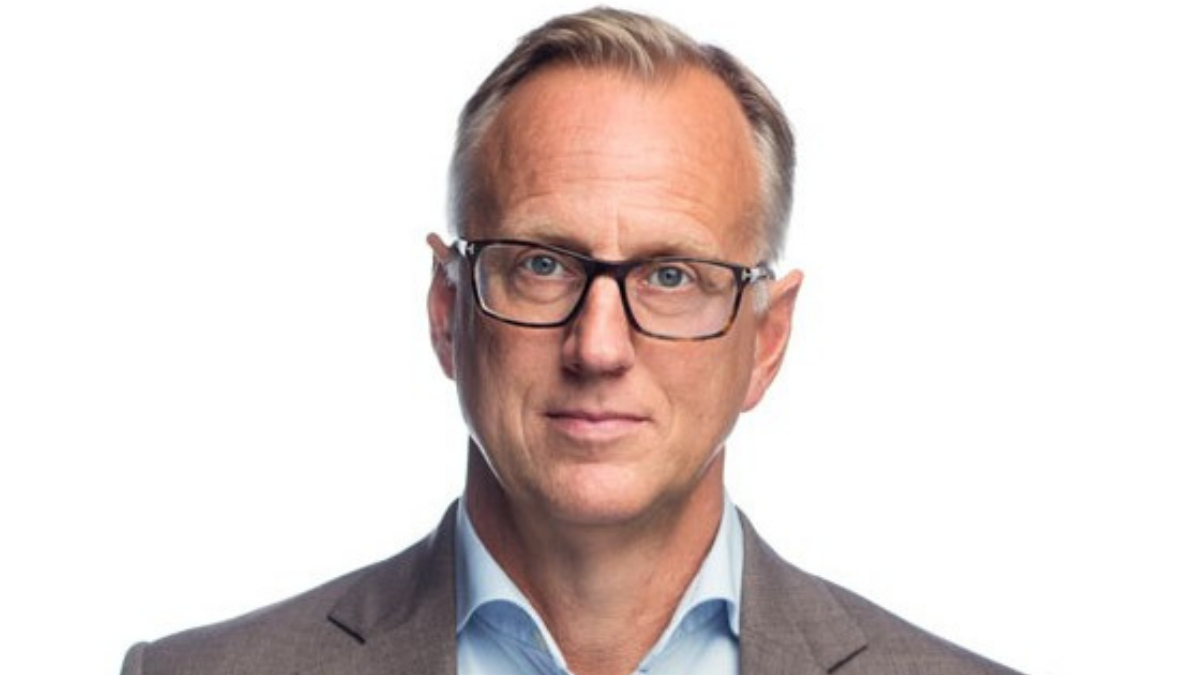
Anders Uddfors has held senior operational leadership positions for more than two decades in companies shaped by growth, transformation, digitalisation and acquisitions. He has, among other roles, been CEO of Semantix, where he led the company through an extensive growth and transformation journey for seven years, and CEO of Lernia, where his mandate was to carry out a major turnaround and transform the business with significantly lower overhead costs and a more sales-driven organisation. Most recently, he was CEO of Prosero Security, where he combined strong organic growth with a decentralised model, a clear acquisition strategy and expansion across the European market.
In parallel, Anders has held a number of board positions and gained experience from both owner-led and private equity-backed businesses. He is currently Chairman of the Board of Origo Group and a Board Member of Prosero Security and Broviken. He has previously served, i.a., as a Board Member of Utbildningsföretagen and Kompetensföretagen. The combination of operational leadership and board experience has given him perspectives from both sides of the table – something he describes as particularly valuable.
We met Anders to talk about leadership during periods of change, the role of the board in growth and transformation, and why interim management can be a powerful tool when an organisation needs experience, speed and a clear mandate.
Leading through change requires both attentiveness and clarity
Anders has spent many years leading organisations through major transformations, particularly in decentralised businesses. According to him, the first step for a leader is to understand the situation before taking action.
“When you come in as a new CEO in an organisation where change is needed, you first need to understand whether rapid change is actually necessary. You should not rush simply for the sake of it. At the same time, there are situations where decisions really do need to be made quickly. When you see a problem, you need to consider what kind of problem it is. Is it a minor scratch that is not particularly serious, or is it a puncture wound that could lead to blood poisoning? They require different measures.”
For Anders, successful change leadership is therefore about combining speed with understanding. An important part of this is meeting people at different levels of the organisation early on, listening and building an overall picture of the situation.
“When you run major transformation programmes, you often underestimate the importance of bringing the organisation along. Information and interaction are extremely important. People need to understand the logic behind the change. That is why you need to be transparent, honest and clear.”
He also emphasises the importance of setting milestones early and creating a clear direction even when not all the parameters are yet in place.
“You need to understand where you are heading. You should not sugar-coat things too much but dare to be clear. People understand much more than you think. And once you see the solution, you need to have the courage to act quickly.”
Decentralisation is about creating the conditions for others to succeed
A large part of Anders’ experience comes from decentralised organisations. In his view, this creates a particular leadership challenge: finding the right balance between a common direction and local autonomy.
“There is no one-size-fits-all approach. You have to start by understanding the organisation’s starting point. In a decentralised organisation, for example, there may be businesses that have come in through acquisitions and have different expectations about how much autonomy they should have.”
For Anders, attentiveness is therefore essential. Not every part of an organisation needs to operate in exactly the same way.
“You have to be willing to let things be slightly different within the organisation. As a leader, you also need to be comfortable with the fact that you are not the one who should have all the answers. It is the business managers who are closest to the business. Your job is to support them and let them be the heroes.”
The same principle applies to central functions. Headquarters should create value for the business, not become an obstacle.
“Those working centrally should make everyday life easier for the businesses. They should challenge and try to improve things, and the business needs to feel that headquarters is contributing to making their business better.”
At the same time, he repeatedly returns to communication as a critical factor.
“If you can clearly show that a change will lead to better results, people will support the change. But you cannot skip communication. Change is very much about communication.”
The board’s most important task is to ask the right questions
His experience from both CEO roles and board work has given him a clear view of the division of responsibilities between the board and management.
“The board, and particularly the Chair, should have binoculars that reach a little further. The board should help the business avoid getting stuck in day-to-day operations and instead look ahead and focus on the strategic direction.”
At the same time, he believes the board should not try to run the business from the boardroom.
“A board should primarily ask the right questions of the business. It is then up to management to come up with the answers. The CEO and management team have a better understanding of the details and should have the real feel for the business. The board’s role is to challenge through questions.”
For Anders, a clear division of responsibilities is essential to a well-functioning relationship between the CEO and the board.
“The CEO is responsible for driving and executing the business. The board should not take up too much space in the boardroom. At the same time, the board is ultimately responsible for ensuring that governance works and that the right structure is in place.”
He also believes that the board must remain focused on the business rather than becoming preoccupied with formalities.
“Governance should be a hygiene factor. The board also needs to make sure there is a focus on the business.”
A good CEO stays one step ahead of the board
Anders also has clear advice for CEOs when it comes to their relationship with the board.
“Being a CEO is much more enjoyable when you are the one setting the agenda before the board starts pushing questions that you need to look into. If you stay one step ahead of the board, you create better dynamics than if the board is constantly chasing the CEO.”
Having experience from both perspectives has been valuable to him.
“I have benefited greatly from working both as a CEO and as a Chair. It gives you a sense of the bigger picture – the role of the CEO, the role of the Chair and the interaction between them. Many CEOs would benefit from also having experience as a Chair, and vice versa. For me, it has been very valuable to have sat in both chairs.”
At the same time, Anders believes there is no universal model for how a Board should operate.
“One of the most important things, both for a Board and perhaps even more so for a CEO, is to adapt to the situation. There is no right or wrong. Sometimes you need to be more operational and sometimes more strategic.”
He also calls for greater concreteness in the boardroom.
“Strategy plans can sometimes become a little too vague. You get nice words about where you want to go, but how are you going to get there? How are you going to implement a new culture? Who is responsible and how much will it cost? You have to dare to go into the details so that it actually turns into action rather than just nice PowerPoints. That is where KPIs and follow-up are important.”
Change starts with understanding – and then making yourself understood
When a company is going through a turnaround, a major transaction or another significant transformation, the ability of its leaders to understand people are at least as important as the strategy itself.
Anders repeatedly returns to a principle he learned from management consultant and speaker Christer Olsson:
“When you are going to make major changes, it is first about understanding and then making yourself understood. The organisation needs to understand what the challenge is, but you also need to understand the individual. What motivates that person? What are their strengths and weaknesses? Then you can support that person in the right way.”
In acute situations, the pace may need to be high. In more complex situations, more time may sometimes be needed for analysis and reflection. But Anders has become increasingly convinced that speed in itself has value.
“You cannot be too slow. You have to be fast and then very clear. Clear about where you are going and how: What needs to be done? How are we going to do it? Who is responsible? When should it happen? In addition, the most effective way to create long-term profitability is often through creating short-term profitability.”
Leadership is about building strong teams
For Anders, good leadership is largely about putting the right people in the right positions – and then giving them trust and freedom.
“When I look at what I think I have been successful at, it is bringing together good people and giving them a great deal of freedom. Then they enjoy themselves. And when people enjoy what they do, they are willing to take on more responsibilities.”
He has therefore often chosen to give strong employees greater responsibility, sometimes through dual roles.
“They know the company, they are smart and driven, and that means you can get much more out of them without building expensive overhead. You have to be very careful with overhead.”
M&A requires respect for what already works
Anders has extensive experience of acquisitions and building decentralised organisations. According to him, one important success factor is not underestimating the culture and entrepreneurial drive of the companies and entrepreneurs joining the organisation.
“The decentralised model is often based on not integrating the companies too tightly, but allowing them to remain somewhat autonomous. That way, you preserve the entrepreneurial spirit.”
In more centralised models, understanding the entrepreneur’s motivations becomes even more important.
“You have to understand the company that is joining and respect what it brings with it. Then you need to have a dialogue so that it lands well within the combined organisation.”
It is not always possible to avoid conflicts or difficult decisions. But open dialogue can prevent differences from building up beneath the surface.
“If you have different views on things, you need to raise them and discuss them rather than allowing them to become a pressure cooker that eventually explodes.”
Ultimately, the direction must be clear.
“The important thing is to focus on the customer and the business. You should try to retain all the talented people, but you also have to have the courage to say: This is the direction we are taking now. It may not suit everyone, and in that case it may be better to part ways.”
Interim management creates momentum in times of change
With his experience of transformation, growth and turnarounds, Anders sees interim management as a particularly valuable tool when organisations are undergoing change.
“I think interim management is particularly effective in situations involving change. The advantage is that you can bring in someone who is somewhat overqualified, with a great deal of experience, who can quickly assess the business and identify what actions are needed.”
An interim manager also brings a different perspective and does not have to navigate the same internal politics.
“The person is completely impartial and is not acting out of self-interest, but looks at what is best for the company. You bring in someone with extensive experience who sees the issue with fresh eyes and who dares to ask the uncomfortable questions.”
Anders has particularly extensive experience of interim solutions within HR and CFO roles and has seen several examples where an interim manager has subsequently stayed on permanently.
“If you take the interim manager on permanently, you know exactly what you are getting. You have already agreed on the direction.”
For Anders, it is precisely the combination of experience, speed and an external perspective that makes interim management particularly relevant when companies need to change quickly and get things done.
From strategy to action
Throughout Anders’ reflections, the same fundamental principle keeps returning: change requires clarity, speed and people who are given the mandate to act. Whether the perspective is that of a CEO, a board or an interim manager, it is about understanding the situation, asking the right questions, creating the conditions for the organisation to succeed and setting clear goals.
His experience from both operational leadership and board work gives him a perspective on change that spans the entire business – from strategy and governance to people, culture and execution.
And perhaps this is where his view of leadership can best be summarised: it is not about having all the answers yourself, but about creating the conditions for others to succeed and, based on that, having the courage to make rapid decisions that improve profitability.
#InterimCEO #InterimMD #Operations #Board #ChairmanOfTheBoard