




Author: Alexandra Laraba , Valtus France
The certainties that defined the pharmaceutical industry for decades are giving way to a more complex, more competitive, and more global landscape. Long-standing assumptions around pricing, scale, and supply chains are being challenged by US pricing reforms, geopolitical fragmentation, rising Asian innovation hubs, and escalating R&D costs.
At the same time, the scale of growth ahead is significant. The global pharmaceutical market is projected to grow from around USD 1.8 trillion in 2025 to USD 3.2 trillion by 2035, with global medicine use approaching 4 trillion daily treatment doses. Growth will be driven by expanding access and rising demand in oncology, immunology, diabetes, and obesity. The key question is which players, and which regions will capture this expansion.
The geography of pharma is rebalancing
The geography of pharma is shifting. Europe remains a major force: in 2024, the research-based industry invested an estimated EUR 55 billion in R&D across the continent and directly employed nearly 950,000 people. Yet North America still accounts for 54.8% of global pharmaceutical sales compared to 22.7% for Europe, reflecting both pricing differentials and the fragmentation of European market access pathways.
Meanwhile, the Brazilian, Chinese, and Indian markets grew at 14.3%, 2.2%, and 9.5% respectively between 2019 and 2024, compared to an average of 7.9% for Europe’s top five markets – a divergence that signals a structural migration of economic activity and research capacity toward faster-growing regions.
This rebalancing is mirrored by a widening performance gap. Roland Berger’s Global Pharma Study 2025, covering 163 leading pharma and life sciences companies, highlights divergence between leaders and laggards: top performers delivered 12% average annual revenue growth between 2021 and 2024, versus a 3% annual decline for the weakest. The gap reflects differences in portfolio focus, R&D discipline, and operational efficiency.
Competing models of European pharma strength
Switzerland, Germany, and Austria illustrate how pharmaceutical competitiveness can be built through different combinations of scientific excellence, innovation ecosystems, advanced manufacturing, and regulatory positioning, with each market offering distinct but complementary strengths.
Switzerland, home to Novartis, Roche, and a dense ecosystem of mid-sized innovators, represents perhaps the most concentrated expression of R&D-led pharma value creation in the world. Five factors will determine whether this position can be sustained:

“Switzerland’s ability to maintain and strengthen its position as the world’s leading pharmaceutical hub will depend on sustaining innovation leadership, maintaining access to global talent, accelerating speed to market, building supply chain resilience, and preserving a stable and competitive business environment.”
Simon Frei, CEO of FS Partners – A Valtus Company, Switzerland
In Simon’s view, intellectual property protection and predictable regulation are strategic assets that compound over time.
Germany faces a related but distinct challenge. The country remains a global leader in pharmaceutical R&D, but faces growing tension between scientific excellence and commercial execution.
“Strengthening international competitiveness will depend on a balanced regulatory environment, predictable market access conditions, and continued investment in innovation. Equally important will be deeper collaboration between biotech, established pharma, academia, and private capital to translate scientific breakthroughs into commercial success.”
Tobias Eitel,
Partner at Valtus in Germany

Austria, meanwhile, has strategic weight in the global pharma landscape that extends well beyond its geography. The country processes 20% of global blood plasma annually, and the Sandoz plant in Kundl is the last penicillin production site in the Western world, delivering 200 million drug packages per year. Roman Benedetto and Christian Kniescheck, Partners at Valtus Management Factory in Austria, point to the country’s increasingly diversified ecosystem.
Vienna alone counts more than 750 life sciences organisations, 49,000 employees, and EUR 22.7 billion in annual sales, making it a natural platform for CEE-facing clinical, regulatory, and commercial expansion.

“With Takeda, Octapharma, Boehringer Ingelheim and Novartis among the anchor names, oncology, immunotherapy and speciality biologics are where smaller firms increasingly compete globally, supported by 191 active biotech companies generating EUR 1.7 billion in turnover.”
Roman Benedetto, Partner at Valtus – Management Factory, Austria
The R&D productivity challenge
Across the industry, R&D spending has risen to a record 17% of revenues, while average annual revenue growth between 2021 and 2024 reached only 3.9%, below the long-standing 5% benchmark. The challenge is no longer increasing research investment but improving its productivity.
As blockbuster patents expire, companies are shifting toward personalized therapies targeting smaller patient populations and more complex development pathways. In response, platform-based innovation built around technologies such as cell and gene therapy and RNA therapeutics is enabling companies to leverage a single scientific foundation across multiple disease areas.
Innovation Beyond the Traditional Centres
In India, the innovation opportunity is being approached from a different angle:
“India is the largest supplier of generics and vaccines to the world, helping reduce the cost of medication for people across countries. The world is waking up to the R&D capability of Indian talent, and Global Capability Centres are being set up in India to tap into this talent. New manufacturing units are being established to de-risk global supply chains, complying with all global standards. India is also moving from simple generics to complex biologics, biosimilars, and speciality drugs — this will help the world provide cost-efficient healthcare.”
Sanjay Lakhotia,
CEO of Noble House, India

China is undergoing a similar transition from generic manufacturing toward innovation-led growth.

“As China’s pharmaceutical sector shifts from generic manufacturing to generate real innovation, the leadership gap between domestic capability and global ambition is becoming the defining bottleneck.”
Thaddäus Müller,
Managing Partner at FES Partners, China
Companies increasingly require leaders capable of navigating NMPA-to-FDA regulatory transitions, redesigning commercial organisations around outcomes-based models, and leading complex organisational change, Thaddeus observes.
From Scale to Precision in Pharma M&A
The deal environment in pharma has entered a decisive new phase. According to EY, life sciences M&A reached USD 240 billion in 2025, up 81% year-on-year, driven primarily by larger transactions rather than a higher volume of deals. Momentum has continued into 2026, with dealmaking already reaching USD 106 billion by mid-year.
The driver is structural: more than USD 230 billion in biopharma revenues will face loss-of-exclusivity exposure by 2030, creating mounting pressure on leading companies to replenish their pipelines externally.
The strategic logic has shifted as well. Rather than pursuing scale, companies are prioritizing precision through targeted acquisitions in disease areas such as cardiometabolic disease, immunology, oncology, and radiopharmaceuticals. Focused acquisitions in the USD 1-5 billion range are increasingly preferred because they allow companies to add specific products, capabilities, or technology platforms without the complexity of full-scale integration.
The search for innovation has also expanded geographically, with China now accounting for approximately one-third of global biotech pipeline assets and 34% of total global alliance investment in 2025.
Japan’s trajectory reflects a different set of strategic imperatives:
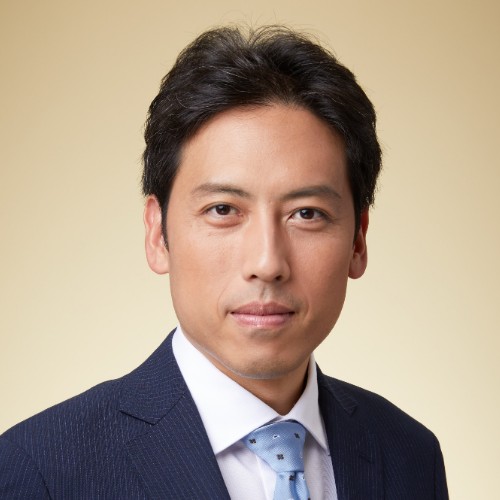
“Japanese pharmaceutical companies are pursuing global expansion through M&A and strategic alliances in major overseas markets — while simultaneously accelerating digital transformation to enable personalized medicine and more patient-centric healthcare.”
Hajime Baba,
CEO of Clareza Partners, Japan
This dual-track approach reflects a broader repositioning of Japanese pharma, balancing international expansion with internal capability building in data, digital infrastructure, and patient-centric care models.
Execution Becomes Pharma’s Key Differentiator
Execution, the ability to translate strategy into results across regulatory environments, manufacturing networks, and talent markets, is becoming a key source of competitive advantage.
The challenge is increasingly interconnected:

“The US pharma industry is not facing a single challenge. It is facing a convergence of pricing pressure, supply chain risk, and declining R&D productivity at the same time. Companies that address these issues independently will struggle compared to those that take a more integrated approach. The companies that outperform over the next decade will be those that connect portfolio strategy, product development, and commercial execution into a single operating model.”
Joe Poling, President & CRO of Think Consulting, United States
This dynamic is particularly visible in Europe, where reindustrialisation ambitions are colliding with operational realities.

“France’s pharmaceutical reindustrialisation is a genuine ambition, and executives are grappling with concrete realities: recruiting qualified industrial profiles in a tight talent market, meeting regulatory compliance timelines, and modernising information systems to match new production rhythms. On top of that, companies must simultaneously drive digital transformation and strengthen physical capacity — a dual undertaking that calls for agile leadership and significantly reinforced managerial resources.”
Emmanuel Fretti,
Senior Partner at Valtus in France
Across both the US and Europe, increasing complexity in operating environments is elevating the importance of organizational flexibility and the ability to integrate internal capabilities with external expertise.
As Hajime Baba, CEO of Clareza Partners, emphasizes, “Companies that successfully combine internal capabilities with external expertise while adapting rapidly to technological, regulatory, and market shifts will be best positioned to remain competitive in the future.”
Pricing pressure and the new geography of risk
The shift in US drug pricing policy is reshaping the competitive landscape. Following the May 2025 Most-Favored-Nation Prescription Drug Pricing executive order and the Medicare pricing provisions introduced under the Inflation Reduction Act, pharmaceutical companies face growing constraints in what has historically been their most profitable market.
The industry’s response has been substantial. In 2025, pharmaceutical companies announced approximately EUR 350 billion in planned US manufacturing and R&D investments, reflecting both tariff concerns and a broader push for supply-chain resilience.
Europe faces a different challenge. While the EU Pharmaceutical Legislation and EU Biotech Act aim to strengthen competitiveness, EFPIA data shows that 66.9% of sales from medicines launched between 2019 and 2023 occurred in the United States, compared with only 15.8% in Europe’s five largest markets. Closing this gap will require not only regulatory reform but also stronger incentives for innovation and faster market access.
More broadly, pharmaceutical supply security has become a strategic priority. Governments increasingly view medicines through the lens of economic resilience and national security, reflecting the lessons of the pandemic, ageing populations, and rising healthcare expenditure.
The next chapter belongs to the agile
The next 25 years of pharma will be shaped by companies capable of combining scientific precision with operational agility, able to move rapidly from discovery to commercialization, manage portfolios with discipline, and adapt to regulatory and geopolitical shifts without losing strategic coherence.
Across the industry’s leading hubs, distinct strengths are reshaping the global pharmaceutical landscape from advanced manufacturing and precision R&D to biotech innovation and digital transformation. The next wave of pharmaceutical leadership will be genuinely multipolar, and those that thrive will be the ones that understand this new map and build the organizational capabilities to lead within it.
Sources
Roland Berger, Global Pharma Study 2025 – How to Thrive in Times of Radical Uncertainty, November 2025
EFPIA, The Pharmaceutical Industry in Figures – Key Data 2025, 2025
IQVIA Institute, Global Medicine Use Trends 2026, 2026
IQVIA, Biopharma M&A Outlook 2026, January 2026
Towards Healthcare Research & Consulting, Pharmaceutical Market Sizing, May 2026
EY, Firepower Report 2026, 2026
Bain & Company, Global M&A Report 2026, 2026
PwC, Global M&A Trends in Health Industries – 2026 Mid-Year Outlook, 2026
BCG, Reimagining Business Models: Biopharma Trends, 2026
OECD, Health at a Glance 2025, 2025
#Pharmaceutical #Biopharma #Healthcare #R&D #Medicine #ValtusAlliance #ValtusGroup