


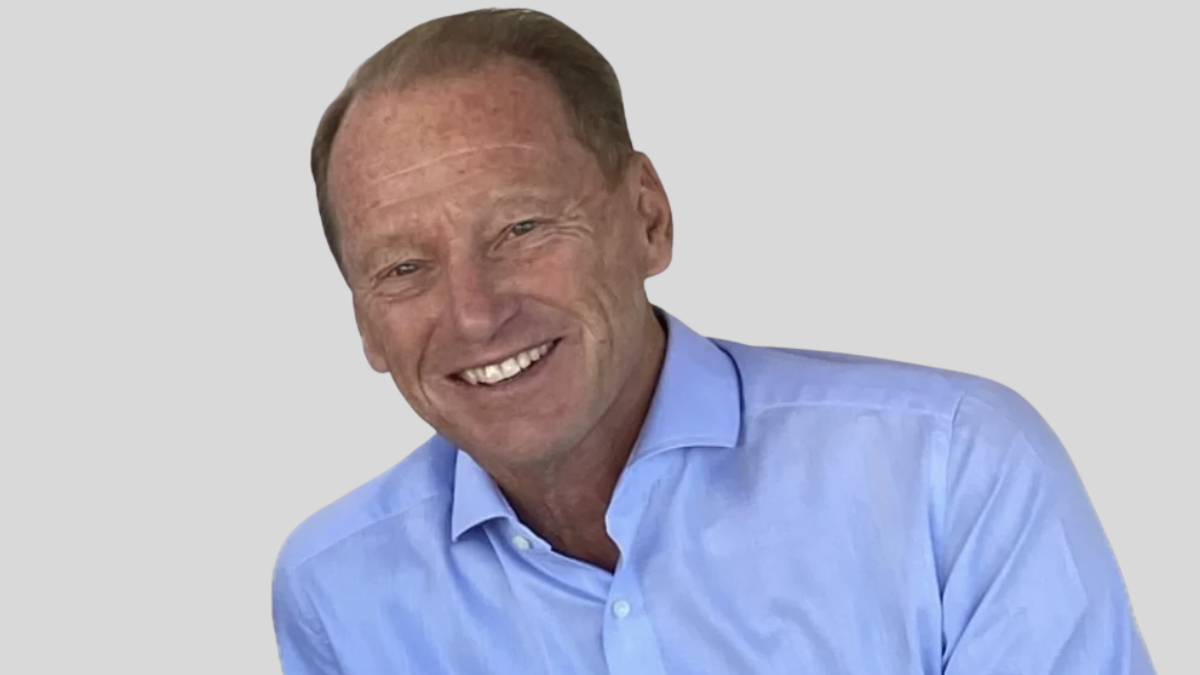
With a background in HR and experience as CEO of both SKF Sweden and SKF China, as well as several senior leadership positions within the SKF Group, Magnus Johansson has built his approach to leadership around clarity, communication and the ability to empower people to take responsibility. He has led organisations through change and experienced leadership from several different perspectives.
We met Magnus to discuss what creates a sense of security during times of change, how an HR perspective can contribute to business performance, and why a leader does not need to have all the answers but must be able to create the conditions for others to succeed.
What does it take for a leader to create a sense of security in an organisation going through change?
“Communication is one of the most important elements of successful leadership. The most important thing I can do as a leader is to make sure my employees understand how I think. If they don’t, things can easily become confusing, particularly in situations where a lot is changing at the same time.
That doesn’t mean you need to have all the answers. But you must be able to explain where you are heading, why certain decisions are being made and what you expect from the organisation. I also believe you need to be willing to be clear about what you don’t know.
Questions and uncertainty almost always arise during periods of change. In those situations, it is better to say, ‘We don’t know that yet’ than to try to provide an answer you cannot stand behind. To me, creating a sense of security is therefore not about giving the impression that everything is under control. It is about ensuring that people understand where we are heading and what is expected of them.
That is why I believe good managers are good communicators. But communication is not just about talking; listening is at least as important.”
You have extensive experience in various HR roles. What do you believe the HR function can contribute to an organisation undergoing major change?
“My own background in HR has above all taught me the value of understanding the people within an organisation.
It is easy to focus on structure, finances and processes when implementing change. But ultimately, it is people who have to make that change work. That is why you need to understand how the organisation actually operates in practice, not just how it looks on an organisational chart.
I have always considered it important to understand what motivates people and how to create engagement around what you want to achieve. HR can contribute an important perspective, but I also believe HR needs to stay close to the business. Having good employee processes is not enough if you don’t understand the results the business needs to deliver.
I brought that perspective with me when I later became a CEO. It gave me an even clearer understanding that people, culture and business are always interconnected.”
What do you see as the biggest difference between being an HR Director and being a CEO?
“As HR Director, you are responsible for an important part of the business. As CEO, you are responsible for the whole organisation. That means you have to bring together many different perspectives – finances, customers, employees, strategy and the external environment – while also making decisions.
But I never felt that I had to leave behind my people-oriented approach when I became CEO. On the contrary, I brought that perspective with me and applied it to operational leadership.
It still comes down to the same fundamental question: how do you get people to want to contribute and use their own capabilities to achieve results?
At the same time, I learned that as a CEO, you cannot be an expert in everything. You need to trust the people around you and be willing to make decisions even when you don’t have all the information. That is quite a significant difference compared with being a specialist in a particular field.”
You have worked in different roles in several countries. What have these experiences taught you about leadership?
“I believe much of leadership is universal. People want to be seen; understand why things are happening and feel that they can influence their own situation. However, how you express this can vary considerably between countries and cultures.
When working internationally, you therefore need to be curious and avoid assuming that what works in one organisation or country will automatically work somewhere else.
It has also taught me the importance of listening before drawing conclusions. When you join a new organisation, you can quite quickly develop an impression of what the problem is. But your initial impression is not always accurate. I like to understand the situation properly before deciding what needs to change.”
What has motivated you to continue taking on new assignments within SKF?
“I am motivated by change and enjoy stepping into new situations and trying to understand what needs to be done.
At the same time, I believe an important part of it is being secure in yourself. When you are confident in your own abilities, you don’t need to know everything from the start. You can listen, learn and build on the expertise already available within the organisation.
That is also something I believe is important for leaders to remember: you don’t need to be the person who knows the most. You need to create the conditions for others to succeed.
I have always enjoyed situations where you need to familiarise yourself with something new, understand what works and what doesn’t, and then find a way forward together with others. That is often when you learn the most.”
When do you think interim management can be a good solution for an organisation?
“It can be extremely valuable when an organisation needs experience and leadership at short notice, for example when a key individual leaves, during a major transformation or when someone is needed to lead a business for a limited period.
The important thing is that the person stepping in understands their assignment and can quickly build trust within the organisation. As an interim executive, you cannot expect people to follow you simply because you have been given a title. You have to establish credibility through the way you act.
I also believe it is important that an interim leader doesn’t focus solely on resolving the immediate situation. When you join an organisation for a limited period, you also need to think about what you will leave behind.”
What do you believe characterises a truly good leader?
“For me, it is largely about self-awareness. You need to understand your own strengths and weaknesses and be aware of how you affect others. You also need to create clarity. People should understand where the organisation is heading, what matters and what their own role is.
But you also need to be able to let go of control. If you, as a manager, have to be involved in every decision, the organisation will eventually end up waiting for you. Instead, a good leader creates the conditions for others to take responsibility.
That is something I have always tried to live by: being clear about the direction, while giving people the freedom to find their own way of getting there.”
You are now retired and have chosen to spend more time with family, friends and golf. What do you take with you from a long professional career into this new chapter?
“I feel that I have had a very rewarding professional career and been given the opportunity to work with many different people and in many different environments. I have learned a great deal from the people around me, including managers, colleagues and employees. Today, I am a golf professional and make my living from it.
My wife and I ran a small investment company for a period, and a few years ago I was approached about a major assignment in Stockholm. At that point, I had to decide whether I wanted to keep filling my calendar or actually take some time off. I chose to take time off.
We subsequently sold the company, and today I spend my time with my wife, my children and grandchildren, my friends and golf. I also mentor a few younger people.
It is actually very rewarding to be able to use some of what I have learned throughout my career to help others who are at an earlier stage in theirs. I no longer need to have my own agenda in the same way. Instead, I can listen and share my experiences whenever they are relevant. It feels like a good continuation of a long professional career.”
#CEO #ManagingDirector #Mentor