


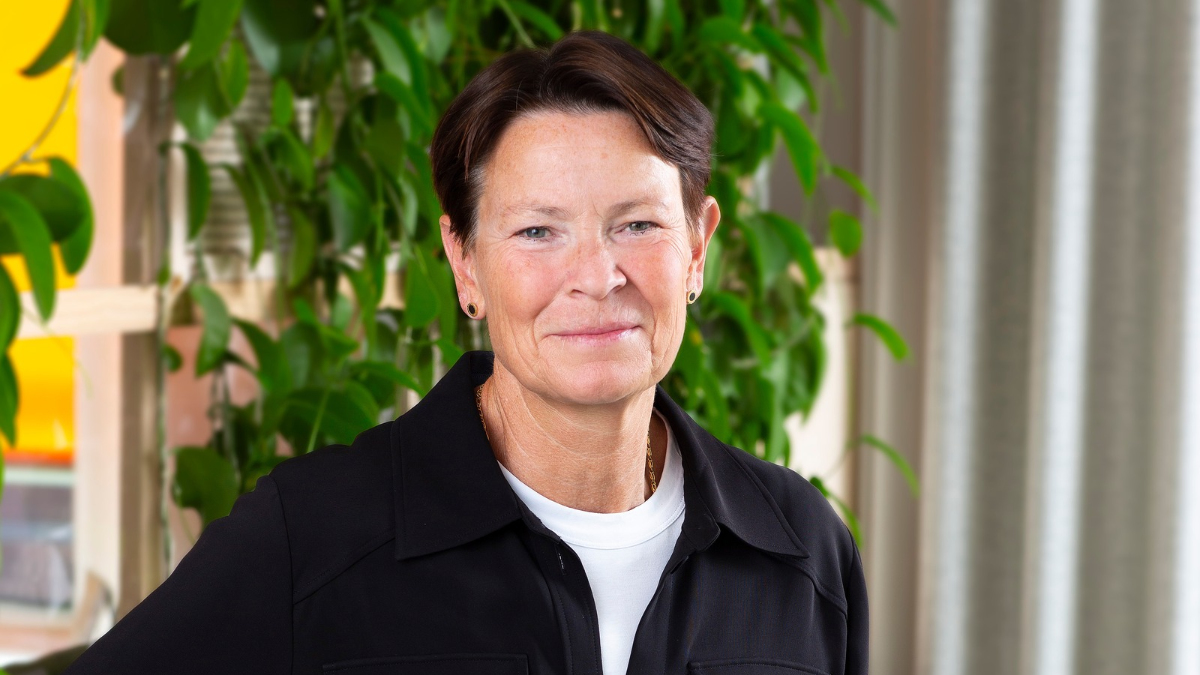
With 40 years of experience in finance, business management and board work, Catarina Fritz has gained extensive experience across a range of industries and ownership structures. Her career includes positions as Finance Director and CFO at companies such as Investor, OMX, Keolis and Akademiska Hus.
Today, Catarina has chosen to focus on board work, holding positions in the real estate, infrastructure, facility management and cultural sectors. Her current board appointments include Coor Facility Management, Svevia, Green Cargo, Alecta Fastigheter, Bjerking, Artipelag and Friends of Moderna Museet.
We met with Catarina to discuss clear leadership during times of change, the role of the board in an increasingly complex business environment, and how interim management can provide both continuity and room to manoeuvre when a key individual leaves an organisation.
From CFO to board work
You have been working in business since 1986 and have held a variety of roles in finance and business management. Can you tell us about your background?
“I started my career at PwC, where I mainly worked with financial services companies. I then moved to Investor as Finance Director, followed by a position as CFO of the Stockholm Stock Exchange, which is now Nasdaq Stockholm.
Throughout my career, I have worked with many different ownership structures. I have experience from listed companies, state-owned enterprises, family-owned businesses and private equity. I have also worked across several industries, although I have mainly focused on the services sector.
After my years in financial services, I moved into facility management and care services. I also served as CFO of a Swedish subsidiary within the large French group Keolis. Being CFO of a French-owned company was an interesting experience, but also quite demanding, as the culture and approach to leadership were very different from those in Sweden, with a much more hierarchical structure.
My final CFO position was at Akademiska Hus, which is responsible for providing a large proportion of the properties used by Sweden’s universities and higher education institutions.”
You have now chosen to focus on board work. What prompted you to take that step?
“When my manager at Akademiska Hus retired and a new CEO came in, it felt like a good time to move on.
I quickly took on four board appointments. However, I then ended up stepping in as interim CEO of one of the companies, ByggVesta, a Swedish-American family-owned business. It was rewarding to take responsibility for the entire organisation as my final operational role. When that assignment ended in April 2024, I decided to focus entirely on-board work. Today, I hold seven different board positions.
Having worked in so many different types of companies and ownership structures is very stimulating. It gives you a broad understanding of how the conditions for leadership and decision-making can vary.”
Clear leadership becomes even more important during change
What do you consider the most important quality in a leader when an organisation is going through change?
“You have to be straightforward and clear. It is also important to be able and willing to communicate throughout the entire organisation.
I believe clarity is essential in leadership. I have always tried to work that way myself, because I think clear communication and direction make it easier for people to deal with change. People have very different attitudes towards change and respond to it in different ways. In my experience, it is important that everyone has the opportunity to be heard during a period of change.
I have had many managers throughout my career, and I have always appreciated those who were clear. When an organisation is in the middle of a transformation, people naturally start to wonder what is happening and ask questions. That makes it even more important to communicate the company’s direction clearly.”
The board must make room for the important questions
What distinguishes a board that genuinely contributes to the business from one that primarily focuses on control and follow-up?
“It is a question of balance. Board work has changed significantly, and governance and compliance now take up considerably more time, partly due to all the new regulations.
I often serve on audit committees, preferably as chair when possible. Many of the control and compliance matters can be dealt with there and prepared ahead of reporting and discussion at board meetings. Good information from committees handling delegated matters gives the board confidence while ensuring that board members are kept informed. This means the entire board does not need to spend time going through every issue that naturally has to be addressed.
At the same time, the board must focus on the company’s business: What are the most significant challenges facing the organisation in the short and long term? What should we, as a board, focus on right now to contribute to the company’s development, and how can we support management?
Ultimately, it is about striking the right balance between control, accountability and actively contributing to the company’s development.”
Interim management creates time to make the right decisions
You have personal experience of working as an interim CEO and have also encountered interim managers through your board appointments. In your view, what is essential for an interim CEO or CFO to step into the role quickly and create value?
“A senior interim manager needs to have a broad skill set. The time it takes to get up to speed must be very short.
I have an example from one of my board assignments where our CFO had decided to leave. It was a very important role in a large organisation, and we needed to consider what kind of CFO we actually needed to recruit. Despite having quite a lot of time and running a structured recruitment process, we still had no new CFO in place when the existing CFO left.
The solution was to bring in an interim CFO. He practically hit the ground running, and it worked extremely well.
It is important that an interim executive can quickly take responsibility and understand the business. They need to get to grips with the situation immediately and start delivering results very quickly.”
When a key individual leaves a company, what should the board consider before recruiting a successor?
“Sometimes a change in leadership is necessary, but I believe it is important to take the time to think carefully about the recruitment process. What do we actually need?
You must not panic and make the wrong appointment. It is important to analyse the situation and understand what matters most given the company’s current circumstances. The right successor is not necessarily a copy of the person who previously held the role.
That is why I believe interim management can sometimes be a very good solution. It gives the company time to properly assess what is needed and make the right recruitment decision. At the same time, an interim executive can address outstanding issues, establish structure and make it easier for the incoming permanent leader to get started quickly.”
What role can an interim manager play in identifying what a company needs to take its next step, both in terms of skills and leadership?
“An interim manager can certainly play a role in the recruitment process. A good interim manager gets up to speed quickly and soon develops an understanding of what is needed. What is missing? What needs to be developed? Where is the company today, and what will it take to move forward?
It can also be about identifying the personal qualities that will be important in the person taking the company forward.
Almost every company is going through some form of transformation today. What was relevant yesterday may not be relevant tomorrow. In that situation, it can be valuable, when the need arises, to bring in someone who can step in quickly, offer an objective perspective and identify what the organisation will actually need going forward.
You have to take the time to find the right candidate in a recruitment process, particularly in listed companies or organisations facing challenging circumstances.”
“You need to create a sense of calm and stability”
You also have personal experience of working as an interim CEO. What did you learn from that experience?
“I had been on the board of ByggVesta for some time, so I already knew both the board and the business. It was a medium-sized company, and I already knew many of the people working there, which meant that a level of trust and understanding was already in place. Nevertheless, it was a completely different role from my previous CFO positions, and very different from being a board member.
Even when you know that an assignment is for a limited period, you still have to take on the challenges facing the company. You cannot think that ‘someone else will deal with that later’. You have to get started, take action where you can and do the job properly.
It is also important to create a sense of calm and stability. When someone leaves a company quite suddenly, it almost always creates uncertainty within the organisation. Building trust in that kind of situation is essential. It has to be based on knowledge, experience and being a reassuring and confident leader.”
Board work benefits from different perspectives
You hold board positions in companies with different operations, ownership structures and circumstances. How does this breadth influence your approach as a board member?
“Today, I serve on the boards of Green Cargo and Svevia, both state-owned companies. I am also on the board of the listed company Coor Facility Management and Alecta Fastigheter, which is owned by Alecta. In addition, I hold a board position at Bjerking, a consultancy specialising in areas including infrastructure and property development, with operations in Stockholm and Uppsala. I am also very interested in art, which is why I sit on the board of Artipelag and have a smaller role connected to Klubb Moderna, the friends’ association of Moderna Museet.
These are very different businesses, ownership structures and operating environments, giving me a broad range of experience and valuable insights. I find it both educational and stimulating to see how different companies operate, how owners approach their responsibilities and which issues become critical depending on the company’s situation.
It also gives me perspective. Experiences from one company can sometimes provide new insights and approaches for another, even when their operations are completely different. At the same time, you must always understand the specific circumstances of each company rather than assume that the same solution will work everywhere.
For me, board work is very much about understanding the company’s situation, taking a step back to see the bigger picture and asking the questions that really need to be asked. It is also valuable to work alongside people with different skills and perspectives. You constantly learn from one another.
I also believe it is important that the board does not get stuck in control and follow-up, but actively contributes to the company’s development. Sometimes the most important task is simply to dare to ask that uncomfortable question. That is often where the most important discussions begin.”
#CFO #FinanceManager